

$79000-$91000/year
Full-Time
1 hour ago
5+ years
Job Details
Position for Job:Veterinary Technician
Number of Positions:1
Hours per Week:30-40
Shift:Full-Time
Shift Starts :12:00 AM
Shift Ends 12:00 AM
Position Overview
Training Supervisor
24/7 Veterinary Specialty & Emergency Hospital
Position Summary
The Training Supervisor is responsible for developing, implementing, coordinating, and maintaining the clinical training program for veterinary technicians and support staff within a 24/7 veterinary specialty and emergency hospital. This position plays a critical role in ensuring that employees receive consistent, high-quality training and are competent in the clinical skills, hospital protocols, and standards required to provide exceptional patient care.
The Training Supervisor will work closely with hospital leadership, department supervisors, doctors, and experienced veterinary technicians to identify training needs, develop educational materials, evaluate employee competency, and promote continued professional development.
The ideal candidate is an experienced Certified Veterinary Technician with a strong background in emergency, critical care, and specialty medicine who can serve as both an educator and clinical resource for the hospital.
Required Qualifications
- Must be a Certified Veterinary Technician (CVT).
- Veterinary Technician Specialist (VTS) certification is strongly preferred.
- Minimum of 5 years of veterinary experience, with significant experience in:
- Emergency medicine
- Critical care
- Veterinary specialty medicine
- Hospitalized and critically ill patients
- Current RECOVER CPR certification required.
- Demonstrated proficiency in advanced veterinary nursing skills.
- Strong understanding of patient monitoring, critical care, emergency procedures, anesthesia, and specialty nursing.
- Must be willing and able to work a flexible, rotating schedule, including nights, weekends, holidays, and other shifts as needed to support a 24/7 hospital and training program.
- Strong communication, organization, leadership, and teaching skills.
- Ability to work effectively with employees of varying experience levels.
Advanced Clinical Skills
The Training Supervisor must be highly proficient in advanced veterinary nursing skills and capable of safely demonstrating and teaching these skills to hospital staff, including but not limited to:
- Urinary catheter placement and management
- Feeding tube placement and management
- Central line placement and care
- Sampling line placement and care
- Advanced vascular access techniques
- Mechanical ventilation training and patient management
- Critical patient monitoring
- CPR and emergency response
- Anesthesia monitoring and patient safety
- Advanced fluid therapy and CRI management
- Blood product administration and monitoring
- Management of critically ill and unstable patients
- Proper aseptic and sterile technique
- Appropriate use and maintenance of critical care equipment
The Training Supervisor must be able to demonstrate competency in these skills and effectively teach, evaluate, and document staff competency.
Scheduling Requirements
Because this is a 24/7 veterinary specialty and emergency hospital, the Training Supervisor must maintain a flexible schedule that allows them to provide training and support across multiple shifts.
This may include:
- Days
- Evenings
- Overnight shifts
- Weekends
- Holidays
- Rotating schedules
- Occasional schedule changes based on hospital training needs
The Training Supervisor should be willing to work periodically on different shifts to ensure training standards are consistently implemented throughout the hospital and not limited to one particular shift.
Essential Skills & Attributes
The successful candidate should demonstrate:
- Strong clinical judgment
- Exceptional technical skills
- Leadership ability
- Excellent communication skills
- Strong teaching and mentoring abilities
- Organization and attention to detail
- Professionalism and accountability
- Ability to give and receive constructive feedback
- Ability to remain calm in high-stress and emergency situations
- Commitment to patient safety
- Commitment to employee development
- Ability to work effectively with a diverse team
- Ability to enforce hospital standards while maintaining a supportive environment
- Commitment to the hospital's values, policies, and protocols
Performance Expectations
The Training Supervisor is expected to:
- Maintain a high level of clinical competency and professionalism.
- Ensure employees receive consistent and appropriate training.
- Maintain accurate training and competency documentation.
- Identify deficiencies in employee knowledge or skills and address them promptly.
- Ensure advanced procedures are taught and performed according to hospital protocols.
- Promote patient safety and high standards of nursing care.
- Maintain current CPR certification and professional knowledge.
- Support department supervisors and hospital leadership.
- Promote teamwork and a positive workplace culture.
- Consistently uphold and reinforce hospital policies, procedures, values, and expectations.
Physical & Environmental Requirements
This position requires the ability to work in a fast-paced veterinary emergency and specialty hospital environment and may require:
- Standing and walking for extended periods
- Bending, lifting, and restraining patients
- Assisting with movement of patients and equipment
- Working around anesthetic gases, medications, biological materials, and other veterinary hospital hazards
- Working with critically ill, injured, and potentially fractious patients
- Responding quickly during emergency situations
- Wearing appropriate personal protective equipment (PPE)
Overall Purpose of the Position
The Training Supervisor serves as a clinical educator, mentor, and leader within the hospital. The primary goal of this position is to ensure that veterinary technicians and support staff have the knowledge, skills, confidence, and competency necessary to provide safe, consistent, and high-quality patient care.
The Training Supervisor is expected to lead by example, maintain high clinical standards, support employee growth, and work collaboratively with hospital leadership to continuously improve the quality of care and the overall employee experience.
Responsibilities
Primary Responsibilities
Training & Education
- Develop, implement, and maintain a comprehensive training program for veterinary technicians and support staff.
- Establish standardized training pathways for new employees based on their position, experience, and department.
- Provide orientation and clinical training for new hires.
- Develop and maintain training materials, competency checklists, quizzes, skills assessments, and educational resources.
- Conduct hands-on clinical training and skills demonstrations.
- Provide continuing education and ongoing training for existing staff.
- Identify knowledge and skill gaps and develop appropriate training plans to address them.
- Ensure employees are appropriately trained before performing advanced or specialized procedures independently.
- Maintain accurate documentation of employee training and competency.
- Perform competency evaluations and provide constructive feedback.
- Coordinate refresher training when protocols, equipment, medications, or procedures change.
Clinical Training
- Serve as a clinical resource for veterinary technicians and nursing staff.
- Train employees in advanced nursing procedures and critical care techniques.
- Provide hands-on instruction for emergency and specialty procedures.
- Assist with training staff in mechanical ventilation and management of ventilated patients.
- Ensure staff understand appropriate patient monitoring, documentation, and escalation of concerns.
- Reinforce appropriate nursing care standards for hospitalized, emergency, and critical patients.
- Work with specialty departments to ensure training is consistent with department-specific requirements.
CPR & Emergency Preparedness
- Maintain current RECOVER CPR certification.
- Coordinate and/or assist with CPR training and competency assessments.
- Ensure staff understand the hospital's emergency response procedures.
- Participate in mock emergency and CPR scenarios when appropriate.
- Identify areas for improvement following emergency events, drills, or training exercises.
Hospital Standards & Protocols
- Uphold and reinforce all hospital policies, protocols, procedures, and standards.
- Ensure training materials and employee competencies remain consistent with current hospital protocols.
- Work with hospital leadership to identify areas where additional training or clarification is needed.
- Help ensure consistent standards of patient care across all shifts and departments.
- Promote compliance with medical record, treatment sheet, medication administration, patient monitoring, and safety requirements.
- Communicate protocol changes effectively to staff and ensure appropriate follow-up training.
Leadership & Workplace Culture
- Create and maintain a positive, respectful, supportive, and professional work environment.
- Lead by example and demonstrate professionalism, accountability, teamwork, and compassion.
- Promote a culture of learning and continuous improvement.
- Encourage staff to ask questions and seek assistance when needed.
- Provide constructive coaching while maintaining appropriate professional boundaries.
- Address training deficiencies and performance concerns appropriately and communicate significant concerns to hospital leadership.
- Support collaboration between departments and shifts.
- Help foster a culture where patient safety, teamwork, education, and professional development are priorities.
- Uphold the hospital's values and represent hospital leadership in a professional manner.
Collaboration with Hospital Leadership
The Training Supervisor will work closely with:
- Hospital management
- Medical leadership
- Department supervisors
- Emergency and critical care teams
- Specialty department leads
- Senior veterinary technicians
- Human Resources/administrative personnel
The Training Supervisor will communicate employee training progress, competency concerns, educational needs, and recommendations for continued development to appropriate leadership
Requirements
Primary Specialty:Emergency & Critical Care (ER), Surgery
Primary Expertise:Emergency / 24-Hour Care, Specialty Practice, Referral Hospital, Academic / Teaching Hospital, Veterinary Diagnostics Lab, Veterinary Pharmaceutical / Industry
Preferred Species Experience :Canine, Feline
Core Veterinary Competencies:Animal Handling & Restraint, Anesthesia Monitoring, Surgical Assistance, Radiology / Imaging, Patient Triage, Venipuncture & IV Catheter Placement, Medication Administration, Laboratory Testing (In-House & External), Wound Care & Bandaging, Prescription Processing, Emergency Care Support
Education: High School, Associates
Benefits & Perks
Basic Medical Coverage
Telehealth Access
Mental Health Support (EAP)
Medical Insurance
Vision Insurance
Competitive Hourly / Daily Pay
Shift Differentials (Nights/Weekends)
Direct Deposit
Bonuses / Incentives
Paid Travel / Mileage Reimbursement
CE Stipend for Relief Work
Mentorship Available
Licensing Fee Reimbursement (if applicable)
Exposure to Advanced Procedures / Specialists
Employee Lounge
Pet-Friendly Workplace
Flexible Scheduling
Paid Time Off (If Contracted)
Staff Discounts on Pet Services
Free Parking
Scrub Allowance (If Applicable)
More Veterinary Jobs Like This
Experienced Veterinary Technician (3–5 Years Experience)
Number of Positions: 2
North Scottsdale Animal Hospital
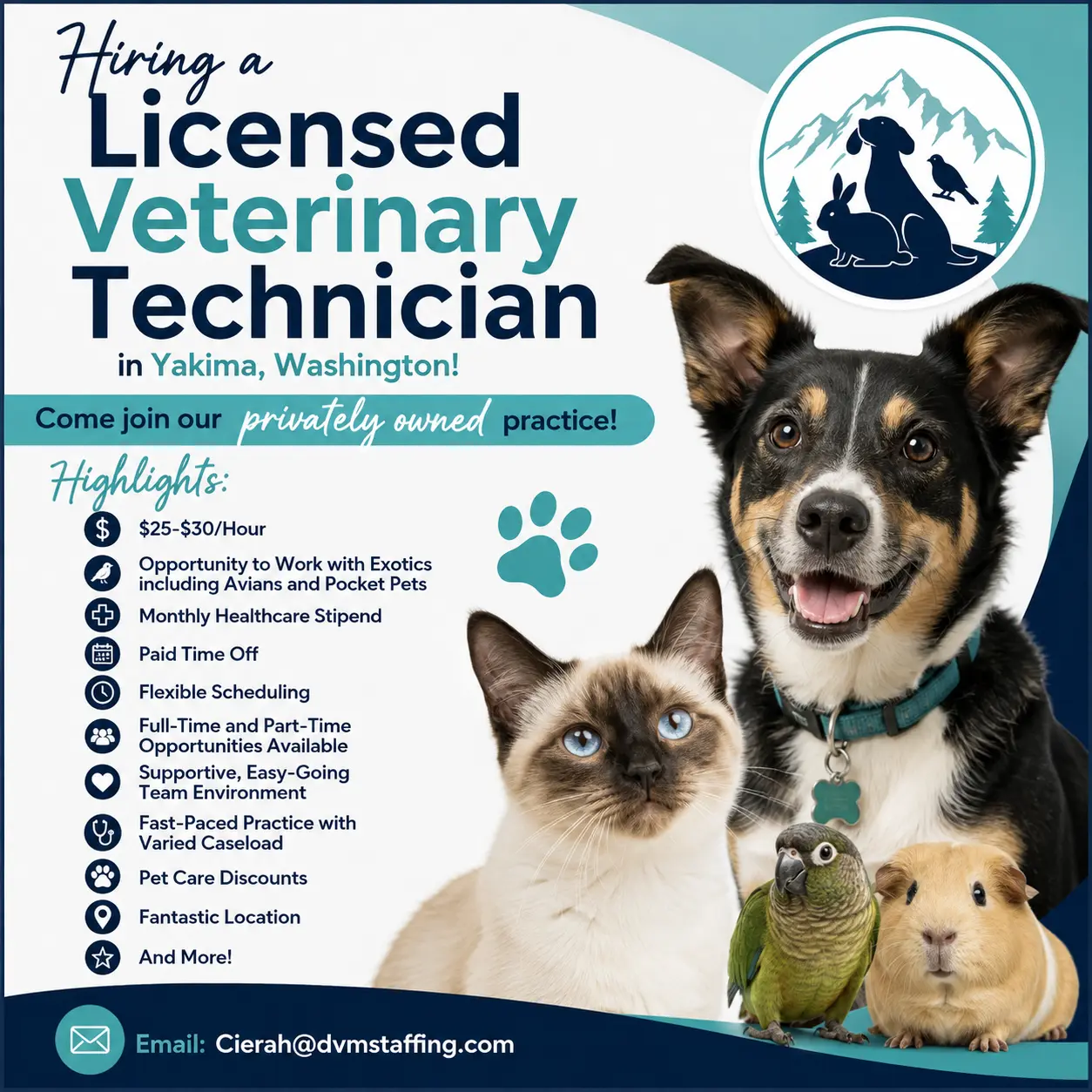
Licensed Veterinary Technician at Airport West Animal Clinic
Number of Positions: 1
Veterinary Recruiting and Staffing Solutions

Pharmacy Veterinary Technician with Wilson Veterinary Hospital
Number of Positions: 1
Veterinary Recruiting and Staffing Solutions