



How AI Is Actually Helping Veterinary Practices Today
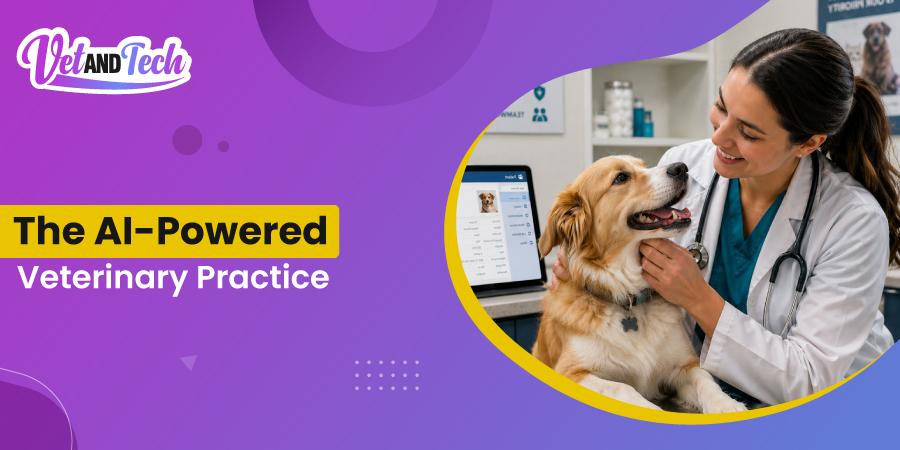
Artificial intelligence has been helping healthcare for years. However, AI in veterinary practice is still limited in use. Only a few practitioners and clinics are implementing AI in their daily practice.
We know that extensive paperwork takes hours from a veterinarian's day. Between health records, SOAP notes, and client follow-ups, administrative tasks consume hours that could be spent on clinical care.
This is exactly where AI tools for vets are proving their value. AI works as a smart assistant for veterinarians. It can help capture, organize, and draft documentation. Simply put, AI helps clinicians stay focused on the patients in the exam room rather than the notepad and keyboard.
But how can we implement AI in veterinary practice management?
If you're looking to adopt AI for clinical use, we have something designed to help you get started.
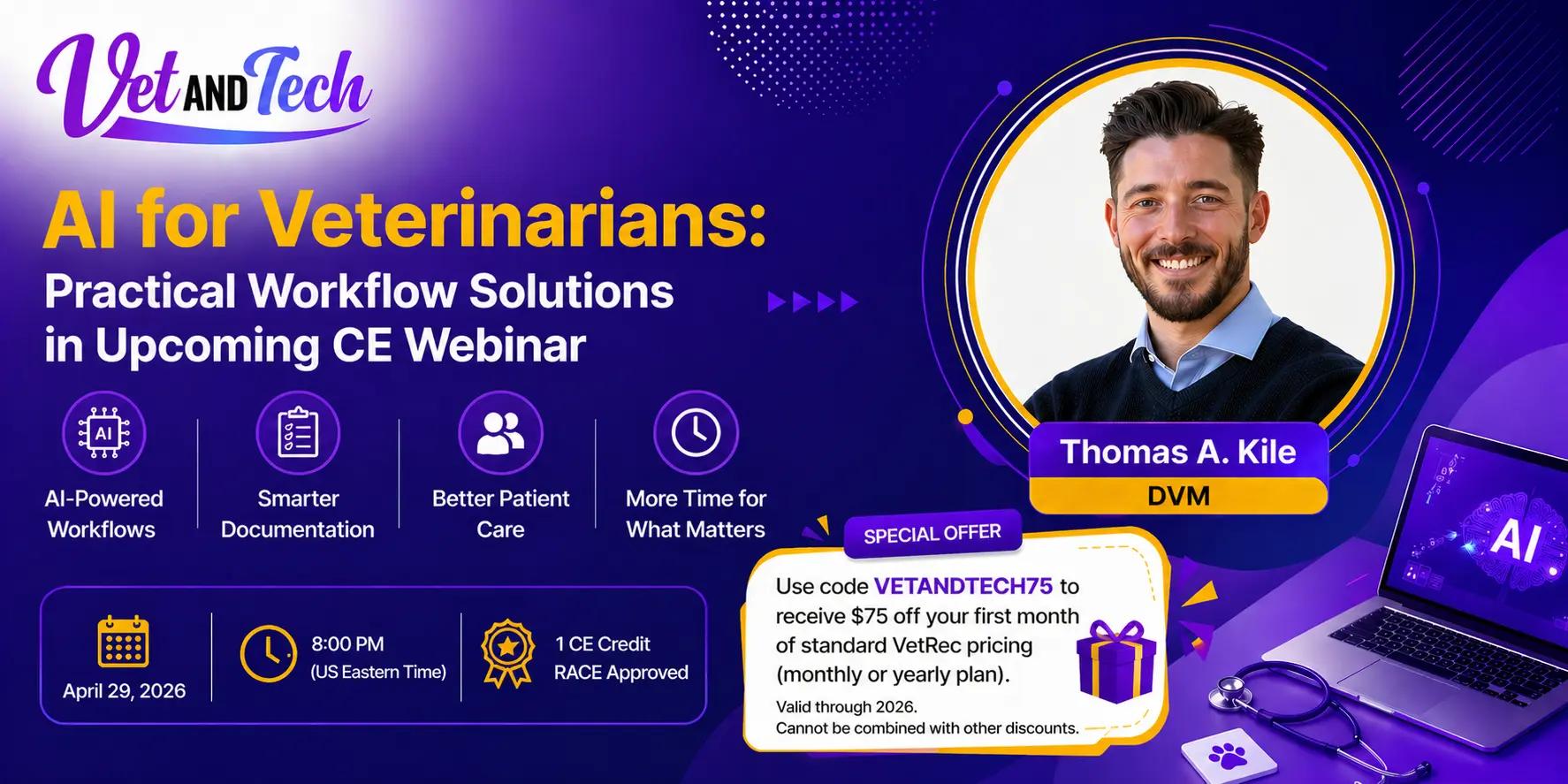
Vet and Tech is hosting a webinar on April 29, 2026, led by the renowned veterinarian Thomas A. Kile. The webinar covers "How AI Is Actually Helping Veterinary Practices Today."
Additionally, attendees can claim 1 RACE-approved CE credit by joining this webinar.
Before we go further, take a moment to register for this free CE webinar.
Free CE Webinar on AI in Veterinary Practice
Learn directly from Thomas A. Kile, DVM, and see how AI can save hours in your daily workflow.
What Does AI Actually Do in a Veterinary Clinic?
Most veterinarians hear "AI" and picture something complex and expensive. However, this is not the case. AI implementation is much more practical.
In a veterinary clinic, AI works mostly in the background. Here is what that looks like in real terms:
- When a patient comes in, AI can pull up a summary of their medical history before you even walk into the exam room.
- During the consult, an AI scribe listens to the conversation and drafts a structured SOAP note in real time.
- After the visit, it can generate discharge instructions and flag follow-up reminders.
AI tools are also helping with scheduling, client communication, and workflow organization. Some tools can identify gaps in care, such as overdue vaccinations or missed check-ins, and prompt your team to act before a client slips through the cracks.
In short, AI in a veterinary clinic does the documentation, organization, and communication work so you can focus on the diagnosis and the animal in front of you. All without you touching a keyboard.
AI in Veterinary Practice - An Assistant or Replacement?
AI is not replacing veterinarians. It cannot examine a patient, apply clinical judgment, or build the kind of trust a client places in their vet. Those things require a human, and no AI tool on the market is designed to change that.
What AI does is handle the repetitive, time-consuming tasks that surround clinical work. Think of it as a highly organized assistant handling repetitive tasks without fatigue. AI ensures work-life balance.
| If you're thinking about broader practice efficiency beyond AI tools, our upcoming Practice Management for Success Learning Track on June 7 covers communication, client care, and wellness strategies — earn 4 CE credits for just $25. |
In addition, the AI scribe tools keep veterinarians in the loop at every step. The AI generates a SOAP note, and you review it. The AI drafts a discharge summary, and you approve it. Nothing is finalized without your sign-off.
So rather than asking whether AI will replace veterinarians, the better question is: what could you do with the two or three hours AI gives back to you each day?
How Would the VetandTech Webinar Help in AI Implementation?
The VetandTech webinar on "How AI Is Actually Helping Veterinary Practices Today" is a valuable opportunity for vets who want to explore how they can use AI in daily practice. With RACE-approved CE credit, this free webinar will explain effective uses of AI in veterinary clinics.
Participants will learn how and where AI is used and what outcomes are expected. From the use of AI in veterinary documentation to communication, this webinar will cover key practical applications.
Furthermore, with real-world examples, attendees can learn how to choose and integrate AI tools in veterinary workflows.
What's the Webinar Agenda?
The agenda is very simple. We aim to educate veterinarians about the role of AI in veterinary practice.
The webinar will cover the following topics:
- What AI is and how AI assistants provide veterinary workflow solutions
- How AI tools for vets summarize medical records
- How AI retrieves patients' histories before appointments
- How an AI medical scribe captures client conversations and generates SOAP notes
- How veterinarians use AI-generated customized documentation templates
- How AI generates referral communications and discharge instructions
- How AI supports client communications and follow-ups
- What to look for when choosing AI tools for veterinary documentation
- How to adopt AI in veterinary medicine responsibly
The webinar's goal is to encourage veterinarians to adopt AI to reduce administrative workload and focus more on patient care.
Tools like Acorn.vet are built on exactly this philosophy, giving veterinary teams AI-assisted documentation without removing the clinician from the commandership.
Special Offer for Attendees
VetandTech offers a one-time discount for all attendees. By using the promo code VETANDTECH75, you can now enjoy $75 off your first month of a VetRec subscription.
Note: The offer is only valid for the year 2026.
Conclusion
AI in veterinary practice is not a future concept. It is a practical tool that is already helping veterinary teams reduce paperwork, stay organized, and spend more time on patient care.
From summarizing medical histories before a consult to generating SOAP notes in real time, AI handles the administrative load that slows veterinarians down every day.
If you are curious about how AI can fit into your specific workflow, the VetandTech webinar on April 29, 2026, is the best next step. Thomas A. Kile will walk through real-world applications, practical examples, and responsible adoption, all in a free, RACE-approved webinar worth 1 CE credit.
Register and watch now for the CE veterinary webinar 2026, and become eligible for a 75$ discount on VetRec's monthly or yearly subscription.


