




Veterinary Dental Standards and Best Practices for Pet Dental Health Month 2026
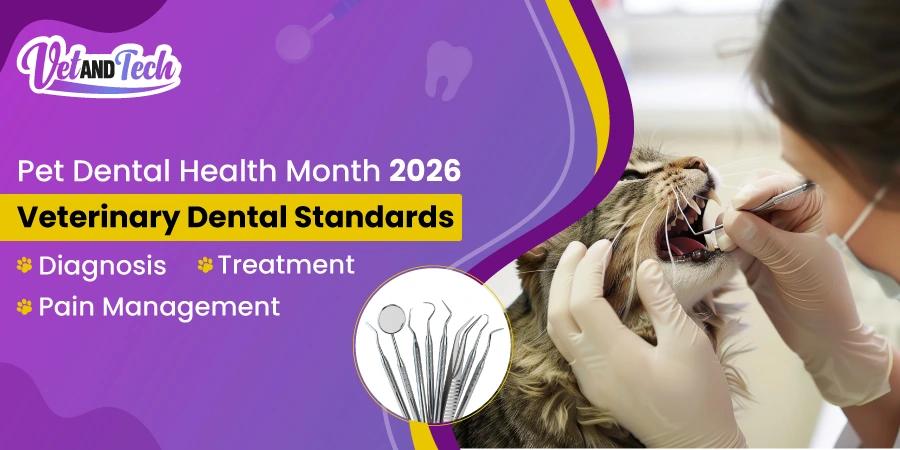
Every February, the question comes up again: what month is dental health month for pets, and what are we supposed to do with it? February Pet Dental Health Month exists to spotlight a problem most veterinarians already understand. Dental disease is common, painful, and often missed until it is advanced. Pet Dental Health Month 2026 should not be treated as a promotional event. It should be a moment to reinforce clinical standards and remind ourselves what proper dental care actually involves.
Most dogs and cats show signs of periodontal disease early in life. By the time bad breath or visible tartar brings a patient in, pathology is usually well established. This is why veterinary dental month matters. It creates a natural pause to look at how we diagnose, treat, and explain dental disease in practice.
Using Pet Dental Health Month 2026 to Raise Standards
National Pet Dental Month should feel less like a marketing campaign and more like a clinical checkpoint. It is a time to pause and ask important questions about how dentistry is being practiced.
Key areas clinics should reassess during this dental health month include:
- Whether dental protocols are consistent across the team
- Whether dental radiographs are taken routinely
- The management of pain prior, at the time and after procedures.
- Medical justification of treatment recommendations
For veterinary students, February dental health month for pets highlights common clinical mistakes. These often include relying too heavily on visual exams, skipping probing or radiographs, or underestimating dental pain.
For practicing veterinarians, this period offers an opportunity to review workflows, retrain staff, and reinforce dentistry as a medical discipline rather than a cosmetic service.
Pet dental month 2026 is not about doing more dentistry. It is about doing it better, with clearer diagnostics, better pain control, and honest communication. When dentistry is treated with the same rigor as any other system, patients benefit, clients trust the process, and standards rise across the profession.
Diagnosis Comes Before Treatment
Pet dental care begins with diagnosis, not scaling. An awake oral examination is also helpful, however, it is not more than a screening measure. It determines apparent issues, not the entire scope of disease.
Endodontic disease, subgingival pathology, and tooth resorption cannot be accurately assessed without anesthesia and radiography.
Why an Awake Oral Exam Isn’t Enough
Visual examination aids in detecting calculus, gingivitis, fracture, and mass, but does not determine the severity of the disease. Managing dental disease based only on visible findings leads to missed pathology and suboptimal care.
The Value of Probing and Dental Charting
An anesthetized oral exam with probing and charting is the foundation of meaningful dental care. Periodontal probing provides information that visual inspection cannot. Pocket depth, attachment loss, and furcation involvement directly affect treatment decisions. Dental charting enforces accuracy, documents disease progression, and supports clear communication with both colleagues and clients.
How Dental Radiographs Reveal Hidden Disease
Dental radiography is the most significant and least utilized diagnostic technique in veterinary dentistry. Stable-looking teeth may be found to have advanced bone loss. Even non-vital teeth look intact. Tooth resorption is often not visible in cats beyond the gumline. When radiographs are omitted, disease is missed and missed disease means continued pain.
Watch our on-demand webinar to learn how to confidently read intraoral radiographs in veterinary dental practice.
Treatment Decisions That Actually Reduce Pain
Treatment planning is made clear once diagnostics have been done. Prophylaxis is appropriate only when there is gingivitis without attachment loss. Once periodontal disease is present, treatment must address more than plaque and calculus.
Prophylaxis Versus Periodontal Therapy
Attachment loss is not treated through scaling and polishing. Advanced periodontal disease requires targeted therapy or extraction. Acting like it is not the case postpones the definitive treatment and increases the period of suffering.
Extraction Is a Treatment, Not a Failure
Surgical dental extraction decisions should be based on prognosis, not emotional hesitation. Teeth with severe attachment loss, advanced furcation exposure, or endodontic disease rarely benefit from conservative management. Removing a painful tooth is appropriate care, not over-treatment.
Healing and Adjunctive Therapies in Veterinary Dentistry
Veterinary dental health month also creates space to discuss adjunctive therapies that support healing without replacing standard care.
The clinical applications of hyaluronic acid in the field of dentistry are one of the areas that have sparked interest. Hyaluronic acid is a naturally occurring biomaterial involved in tissue hydration, inflammation modulation, and wound healing. Its use in human dentistry is well established, and veterinary applications are growing.
For clinicians interested in understanding where hyaluronic acid fits into dental treatment, our upcoming webinar, Hyaluronic Acid: Clinical Application in Human and Veterinary Dentistry, offers a practical, evidence-based overview.
The session explains how hyaluronic acid interacts with tissues, reviews current research in both human and veterinary dentistry, and outlines its role as an adjunct in periodontal therapy and post-procedural healing. It is presented as a supportive tool, not a replacement for proper diagnostics and treatment.
Our on-demand veterinary webinar library also includes past dental-focused sessions designed to help veterinarians and vet students strengthen their dentistry skills beyond February pet dental health month.
Why Anesthesia and Pain Control Are Essential
Dental disease is painful and dental treatment can also cause discomfort unless there is enough analgesia. Anesthesia protocols should be supported by multimodal pain management, including local nerve blocks and systemic analgesics.
Addressing Pain Beyond the Procedure
Pain does not end when the patient wakes up. Analgesia after operations is a necessity in recovery and wellbeing. Ignoring dental pain is the most widespread gap in small animal practice, which can be improved by closing it to enhance the results and customer confidence.
What Pet Parents Need to Understand During Dental Health Month
Pet dental awareness month is an opportunity to speak directly to pet parents about what dental disease really looks like and why it matters. Many still believe dental care is cosmetic or optional, largely because the most painful disease lives below the gumline and stays hidden.
Pet parents should understand a few core realities during dental health month for pets:
- Dental disease is painful, even when pets continue eating normally
- Most dental problems cannot be detected using visual exams.
- Anesthesia and dental radiographs are necessary to make a proper diagnosis.
- In many cases, extraction is the most effective and humane treatment.
Clear communication improves compliance. Daily tooth brushing remains the most effective home care strategy, but it must be clearly demonstrated, instructed, and reinforced.
Professional treatment cannot be substituted with dental diets and approved products, which may aid in maintaining good oral health. Honest conversations during pet dental awareness month lead to better long-term pet dental health and stronger trust between clinics and clients.
FAQs:
1. What is Pet Dental Health Month and when is it observed in 2026?
Pet Dental Health Month is observed every February. It is aimed at increasing awareness about dental disease in pets, particularly dogs and cats. During this period, veterinary clinics focus on highlighting the importance of early diagnosis, proper dental check-ups and preventive treatment.
2. Why is Pet Dental Health Month important for dogs and cats?
Periodontal disease is common in most dogs and cats with no or minimal symptoms. Pet Dental Health Month highlights the importance of identifying problems below the gumline, where pain and infection commonly go unnoticed until disease is advanced.
3. What dental problems are most commonly found during Pet Dental Month?
Periodontal disease, gingivitis, fractured teeth, tooth resorption in cats, and infected tooth roots are the most common ones. A good number of these disorders can only be identified by anesthetized tests and dental x-rays.
4. What is the theme for pet dental health month?
There is no officially declared single theme for Pet Dental Health Month 2026. The emphasis is on early intervention, adequate diagnosis, pain management, and preventive dental care of pets, notably dogs and cats

%20VAT%20Blog%20-%20Remote%20Veterinary%20Jobs%20Roles%2C%20Pay%20%26%20How%20to%20Find%20Them-thumbnail-1790256372.webp&w=3840&q=75)


