




The Hidden Risks of Anesthesia in Birds and the Sedation Protocols Every Avian Vet Should Know
As avian medicine continues to advance, veterinarians are adopting safer approaches to handle pet birds during medical exams and procedures. Although general anesthesia is essential for major surgeries, it is not ideal for frequent use. Birds are often managed through manual restraint for non-invasive procedures. Although manual handling can cause significant stress and potential complications.
Hence, sedation is increasingly becoming the preferred option for safer handling, diagnostics, and minor procedures in avian medicine.
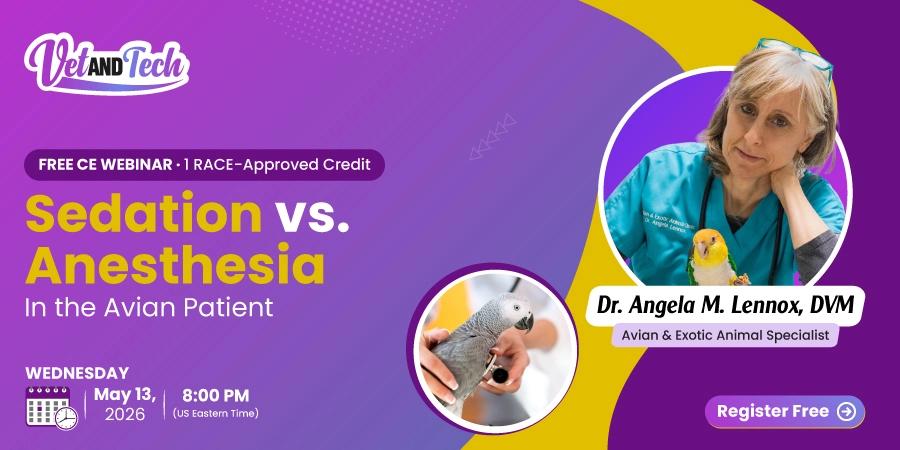
The upcoming CE webinar, "Sedation as an Alternative to Anesthesia in the Avian Patient," scheduled for May 13, 2026, provides a research-based overview of using avian sedation protocols in veterinary clinics.
Balancing Risks Between Sedation and Anesthesia
Birds, particularly psittacine species, are highly susceptible to stress-induced complications during physical restraint. General anesthesia provides necessary immobility; its risks often make it unsuitable for frequent or routine use in sensitive avian species.
Many drugs are now used to sedate birds when combined with local analgesic agents. This combination can help during minor surgical procedures. Avian vets are now considering sedation whenever general anesthesia is not necessary.
This CE session equips veterinary professionals with the knowledge to reduce stress from restraint and minimize anesthesia risks by incorporating sedation as a safer alternative in avian practice.
The session will focus on:
- Introduction to sedation and anesthesia in psittacine patients
- Comparing the risks and benefits of sedation and anesthesia
- Reviewing sedative agents commonly used in avian species
- Identifying cases where sedation is safer than general anesthesia
- Using sedation to reduce stress during routine handling of avian patients
- Combining sedatives with local analgesia for minor surgical procedures
- Improving and streamlining recovery in avian patients
What You’ll Learn in This CE Webinar
The free VetandTech CE webinar "Sedation as an Alternative to Anesthesia in the Avian Patient” provides a practical guideline for managing avian patients from admission to recovery.
By attending this session, attendees can claim RACE-approved CE. Moreover, this webinar for vets will elaborate on the importance of avian sedation, along with drug usage and reversal techniques.
Here’s a glimpse of what attendees will learn through this webinar.
- Sedation Agents: A review of current research-based and anecdotal data on specific drugs used in pet avian species.
- Clinical Scenarios: Determining when sedation provides sufficient restraint for diagnostics versus when general anesthesia is mandatory.
- Step-by-Step Procedures: A complete look at a sedation and local analgesia protocol from initial administration through monitoring and final recovery.
- Risk Assessment: A direct comparison of the benefits and physiological impacts of sedation versus general anesthesia.

Webinar Details
- Date: May 13, 2026
- Time: 8:00 PM (US Eastern Time)
- CE Credits: 1 (RACE Approved)
- Category: Anesthesia & Analgesia
- Instructor: Angela M. Lennox, DVM, Dipl. ABVP (Avian), Dipl. ECZM (Small Mammal)
Who Should Attend?
- Veterinarians
- Veterinary technicians
- Practice managers
- Veterinary students
- Veterinary professionals interested in technology and innovation
Why Sedation is Essential for Modern Avian Practice
High-stress levels in birds can lead to catecholamine release. It can potentially cause cardiac arrhythmias or death during handling. Research indicates that using appropriate sedative agents can significantly lower these risks.
Key benefits of integrating sedation protocols include:
- Reduced Procedure Time: Faster induction and recovery compared to gas anesthesia.
- Improved Safety Profiles: Lower impact on the cardiovascular and respiratory systems.
- Enhanced Client Satisfaction: Pet owners are often more comfortable with sedation for minor diagnostic procedures than with full general anesthesia.
Sedation in birds also helps in maintaining a more controlled and predictable handling environment, reducing the need for repeated restraint attempts. It allows veterinarians to perform diagnostic and minor therapeutic procedures with greater precision and less patient distress. In many cases, it also supports smoother post-procedure recovery, helping birds return to normal behavior more quickly.
More Resources Available on VetandTech
Vet and Tech provides valuable learning opportunities through expert-led veterinary webinars designed for continuous professional development. Our sessions help veterinary professionals expand their knowledge, earn CE credits, and support long-term career growth. We also share industry insights, emerging trends, and practical discussions to keep the veterinary community informed and connected.
Expand your clinical knowledge with our comprehensive platform tools:
- Vet Education: Access live and on-demand veterinary CE webinars across all specialties.
- Technical Industry Insights: Read the latest blogs on surgical instrumentation and exotic animal care.
- Career Development: Explore new veterinary roles through the Pago job platform.
- Global Networking: Check the calendar for Veterinary Conferences 2026.
Register Today
Don’t miss this opportunity to refine your avian protocols with expert guidance from Dr. Angela Lennox. Understanding the importance of sedation will help you provide safer, more effective care for your avian patients.
Gain practical, clinically relevant strategies that can be directly applied to improve handling efficiency, procedural confidence, and overall patient welfare in avian practice.
Register now to secure your spot for the Avian Sedation CE Webinar on May 13, 2026. Free, RACE-approved, and designed for veterinary professionals at every level.


