




Common Cybersecurity Risks in Veterinary Practices (and What Actually Works to Stop Them)
A small veterinary clinic gets hit with ransomware. Appointments stop. Patient records are locked. Staff switch to paper. Revenue drops within hours.
This isn’t rare anymore. Cybersecurity for veterinary offices has become a real operational risk, not just an IT issue.
Most veterinary practices are vulnerable because they rely on outdated systems, weak access controls, and untrained staff. The fix isn’t complex but it requires discipline: secure systems, train people, and monitor continuously.
This guide breaks down the real risks, why they’re increasing, and what veterinary clinics should do right now.
Why Are Veterinary Clinics Being Targeted?
Veterinary practices weren’t always a target. That changed with digital transformation in veterinary medicine.
Today, clinics handle:
- Digital patient records (EHR/EMR)
- Payment systems
- Cloud-based scheduling tools
- Telemedicine platforms
- AI-driven diagnostics and documentation
This creates valuable data and multiple entry points for attackers.
According to cybersecurity reports from IBM and Verizon (Data Breach Investigations Report), small healthcare-related businesses are increasingly targeted because they have weaker defenses but still store sensitive data.
What Are the Most Common Cybersecurity Risks in Veterinary Practices?
1. Phishing Attacks
A staff member gets an email that looks like it’s from a lab partner or software provider. They click a link. Credentials are stolen.
That’s it. Phishing works because:
- Veterinary staff are busy and multitasking
- Emails often look legitimate
- There’s little formal cybersecurity training
Real impact:
- Unauthorized access to practice management software
- Exposure of client payment data
- Compromised email accounts used to scam clients
2. Weak Passwords and No Access Control
Many clinics still use:
- Shared logins
- Simple passwords like “Vet123”
- No multi-factor authentication (MFA)
This is a direct invitation for attackers.
Best practice:
- Unique logins for every employee
- MFA enabled on all systems
- Role-based access (receptionists don’t need full medical records access)
3. Outdated Veterinary IT Systems
Legacy systems are common in veterinary IT environments. The problem is simple:
Old software = known vulnerabilities
If systems aren’t patched regularly, attackers can exploit them automatically using widely available tools.
This is especially risky in:
- Practice management software
- Imaging systems
- On-premise servers
4. Ransomware Attacks
Ransomware locks your files and demands payment. Healthcare-related sectors are prime targets because:
- Data is critical and time-sensitive
- Clinics can’t afford downtime
- Many lack backups
Stat: According to Sophos, 66% of healthcare organizations faced ransomware attacks in recent years.
For a veterinary clinic, even one day offline means:
- Missed appointments
- Lost revenue
- Damaged reputation
5. Unsecured Devices and Networks
Veterinary practices often use:
- Personal devices (phones, tablets)
- Shared Wi-Fi networks
- Internet-connected diagnostic equipment
If these aren’t secured:
- Hackers can access internal systems through the network
- Malware can spread across devices
6. Third-Party Software Risks
Modern clinics rely on:
- Cloud billing tools
- Telehealth platforms
- Tools for veterinary documentation
Every integration adds risk. If a vendor is compromised, your clinic data can be exposed—even if your internal systems are secure.
Join this Free CE Webinar on How AI Is Changing Cybersecurity for Veterinary Offices
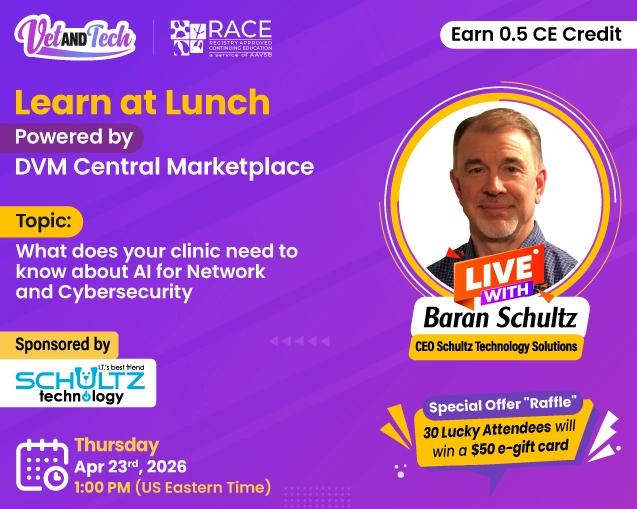
Why You Should Attend: If you’re trying to understand how cybersecurity for veterinary offices is evolving beyond firewalls and antivirus tools, this session is worth your time.
Register for the Virtual Learn at Lunch 2026 Powered by DVM Central Marketplace
This live session is designed specifically for veterinary clinics, not generic IT teams instructed by Baran Schultz. It focuses on how artificial intelligence is already being used inside real veterinary IT environments to detect threats, monitor networks, and prevent downtime.
How Technology Is Increasing Both Risk and Opportunity
Technology in veterinary medicine is evolving fast. Clinics are no longer running on basic systems. They now rely on AI, automation, and connected tools for daily operations.
AI is being used in diagnostics and training. Record keeping is becoming automated. Smart devices are tracking animal health in real time. This shift is improving accuracy and saving time for veterinary teams.
But this progress comes with trade-offs. Every new system adds another layer of risk. More tools mean more data, and more data means more exposure.
For example, many clinics now use AI tools for veterinary documentation to reduce manual work. These tools depend on cloud storage. That means sensitive data is constantly being shared across networks.
At the same time, digital transformation in veterinary clinics is increasing data flow between platforms. Practice management systems, billing software, and lab tools are all connected. Each connection creates a possible entry point for cyber threats.
What Are the Best Practices for Cybersecurity in Veterinary Offices?
Here’s what actually works in real clinics—not theory.
1. Train Your Staff (This Is Non-Negotiable)
Human error causes most breaches. Train your team to:
- Spot phishing emails
- Avoid clicking unknown links
- Use secure passwords
- Report suspicious activity immediately
Even basic training can reduce risk significantly.
2. Use Multi-Factor Authentication Everywhere
If you only do one thing, do this. MFA adds a second layer of security beyond passwords. Even if credentials are stolen, attackers can’t log in.
Apply MFA to:
- Email accounts
- Practice management systems
- Cloud platforms
3. Backup Data Daily (and Test It)
Backups protect against ransomware. But here’s the mistake clinics make: They back up data—but never test recovery.
Best practice:
- Daily automated backups
- Store backups offline or in secure cloud storage
- Test recovery monthly
4. Keep Systems Updated
Outdated systems are one of the easiest ways attackers get in. Most cyber threats in veterinary clinics don’t rely on complex hacks—they exploit known weaknesses that already have fixes available.
Software updates exist to patch these vulnerabilities. When updates are delayed or ignored, those gaps stay open. Attackers actively scan for systems that haven’t been updated.
Set a simple routine. Update your software weekly to stay current. If a critical security patch is released, apply it immediately instead of waiting.
5. Secure Your Network
Basic steps:
- Use a firewall
- Encrypt Wi-Fi (WPA3 if possible)
- Separate guest and internal networks
- Disable unused ports and services
6. Work with a Veterinary IT Specialist
General IT providers don’t always understand veterinary workflows. A specialist in IT security for vet clinics can:
- Identify unique risks
- Secure practice management systems
- Ensure compliance with data protection standards
What Are the Real Consequences of Ignoring Veterinary Data Security?
This isn’t just an IT problem. It directly affects how your clinic runs and how clients see you.
A single breach can break client trust. Once payment or personal data is exposed, it’s hard to rebuild confidence. Legal issues can follow, especially if financial data is involved.
Operations can stop overnight. Systems go down, appointments get canceled, and staff are forced to work without access to records. That quickly turns into lost revenue.
For some clinics, the damage goes beyond repair. Not every practice recovers from a serious cybersecurity incident.
How Is AI Changing Cybersecurity in Veterinary Practices?
AI in veterinary medicine is doing two things at once:
Helping:
- Detect unusual system activity
- Automate security monitoring
- Improve documentation accuracy
Increasing risk:
- More data stored digitally
- More integrations with third-party tools
- New attack vectors through AI platforms
This is why cybersecurity must evolve alongside AI adoption.
Are There Career Opportunities in Veterinary Cybersecurity?
Yes—and demand is growing. As veterinary clinics adopt more technology, they need professionals who understand both:
- Veterinary workflows
- Cybersecurity systems
This has created new paths in:
- Veterinary cybersecurity jobs
- Health IT security roles
- Data protection in animal healthcare
Conclusion:
Cybersecurity for veterinary offices isn’t about buying expensive tools. It comes down to consistent habits followed every day.
Clinics that stay protected usually focus on three things. They train their staff to avoid simple mistakes. They control who can access their systems. And they keep everything updated.
Everything else builds on these basics. As technology continues to shape veterinary practices, clinics that take security seriously don’t just avoid problems. They run smoother, protect client trust, and stay ahead without constant disruption.
Common Questions Veterinary Clinics Ask
1. How much should a clinic invest in cybersecurity?
There’s no fixed number, but most small practices allocate 5–10% of their IT budget to security. Skipping this often costs far more later.
2. Do small veterinary clinics really get targeted?
Yes. In fact, small clinics are often easier targets because they lack dedicated IT teams.
3. Is cloud software safer than on-premise systems?
It depends on the provider. Reputable cloud platforms often have stronger security—but you still need:
- Strong passwords
- MFA
- Access control


