




How Long Does Gabapentin Last in Cats? Insights for Veterinarians
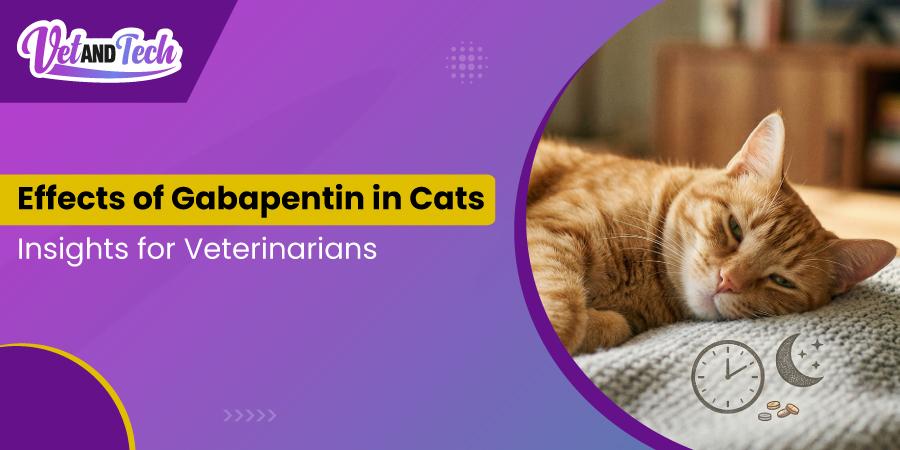
| Quick Answer: How Long Does Gabapentin Last in Cats? |
| Gabapentin's effects last 8–12 hours in most healthy cats. It begins working within 1–2 hours of oral dosing and reaches peak effect at approximately 2–3 hours after administration. The plasma half-life is 3–4 hours. In cats with kidney disease, effects may last significantly longer. Most veterinarians dose gabapentin every 8–12 hours for pain, or as a single pre-appointment dose for anxiety. |
|
Parameter |
Value |
|
Onset of action |
1–2 hours |
|
Peak effect |
2–3 hours after dosing |
|
Duration of effect |
8–12 hours |
|
Plasma half-life |
3–4 hours |
|
Pre-visit timing (anxiety) |
Give 1.5–2 hours before appointment |
What Is Gabapentin?
Gabapentin is an anticonvulsant and analgesic medication originally developed to treat epilepsy in humans. In veterinary medicine, it has become one of the most widely used drugs in feline practice, prescribed for pain management, anxiety reduction, and seizure control.
It works by binding to calcium channels in the nervous system, reducing the release of excitatory neurotransmitters involved in pain signaling and neurological overactivity. This mechanism gives gabapentin its triple utility: pain relief, sedation, and anticonvulsant effects.
Important: Gabapentin is an off-label use in cats — not FDA-approved for feline patients, but legally and commonly prescribed by veterinarians. This is standard practice in veterinary medicine.
Veterinarians prescribe gabapentin in cats for three primary indications:
- Pain management — neuropathic pain, post-operative pain, and chronic musculoskeletal conditions such as arthritis
- Anxiety reduction — pre-veterinary visit stress, travel anxiety, grooming visits, and exposure to stressful events
- Seizure control — typically as an adjunct in a multimodal anticonvulsant regimen
How Long Does Gabapentin Last in Cats?
The clinical duration of gabapentin in cats is 8 to 12 hours, based on a plasma half-life of approximately 3–4 hours in feline patients (KuKanich & Papich, 2020). This means that for most cats, a twice- or three-times-daily dosing schedule is appropriate for chronic conditions.
For single-dose use before a stressful event, effects will be noticeable for most of the day following administration.
How Long Does Gabapentin Take to Work in Cats?
After oral administration, gabapentin begins to take effect within 1 to 2 hours. For pre-veterinary visit anxiety, most clinicians recommend administering the dose 1.5 to 2 hours before the appointment to allow adequate time to reach therapeutic plasma concentrations (van Haaften et al., 2017). Some veterinarians recommend a second dose the evening before a particularly stressful appointment for highly anxious patients.
For chronic pain or seizure management, clinical benefit builds over several days of consistent dosing as steady-state plasma levels are reached. Cat owners should be counseled to expect a gradual improvement rather than an immediate response when starting long-term gabapentin therapy.
Gabapentin Duration in Cats With Kidney Disease
|
Special consideration for CKD patients: Gabapentin is primarily excreted by the kidneys. In cats with chronic kidney disease (CKD) — a common condition in older cats — the drug is cleared more slowly, and effects can last significantly longer than 8–12 hours. |
For cats with known renal impairment, veterinarians should:
- Extend dosing intervals (every 12–24 hours rather than every 8–12 hours)
- Start at the lowest effective dose and titrate cautiously upward
- Monitor closely for signs of excessive sedation or ataxia, which indicate drug accumulation
- Reassess renal function regularly in long-term gabapentin users
This is one of the most clinically significant considerations when prescribing gabapentin to geriatric cats, as a large proportion of senior feline patients have some degree of underlying renal dysfunction.
Gabapentin Dosage in Cats
Dosing varies based on the indication. Always calculate based on current body weight, and start at the lower end of the range — especially in older or renally-compromised patients.
General Dosage Chart (mg/kg)
|
Indication |
Dose |
Frequency |
|
Acute pain |
5–10 mg/kg |
Every 12 hours |
|
Chronic pain |
5 mg/kg |
Every 8–12 hours |
|
Pre-visit anxiety |
50–100 mg (total dose) |
Once, 1.5–2 hrs before |
|
Seizure adjunct |
5–10 mg/kg |
Every 8 hours |
Note: Most cats receiving gabapentin for pain will not require doses exceeding 50 mg. Higher doses are reserved for anxiety management and used under close veterinary supervision.
Gabapentin Dosage by Weight (ml, using 50 mg/ml compounded liquid)
|
Cat Weight |
Dose (mg) |
Volume (ml) |
|
2 kg |
10–20 mg |
0.2–0.4 ml |
|
3 kg |
15–30 mg |
0.3–0.6 ml |
|
4 kg |
20–40 mg |
0.4–0.8 ml |
|
5 kg |
25–50 mg |
0.5–1.0 ml |
Critical dispensing note: Human oral gabapentin solution (250 mg/5 ml) may contain xylitol, an artificial sweetener toxic to dogs and potentially harmful to cats. Always verify the formulation before dispensing, or use a compounded, xylitol-free feline preparation.
What Does Gabapentin Do for Cats?
Gabapentin’s therapeutic effects in cats stem from its central nervous system activity:
Pain relief: Gabapentin modulates calcium channels in dorsal horn neurons, reducing the transmission of nociceptive signals. It is particularly effective for neuropathic and chronic pain. Research does not strongly support gabapentin as a first-line agent for acute post-operative pain in cats (Steagall et al., 2018).
Anxiety reduction: Its sedative and anxiolytic properties make gabapentin highly effective for stress management before veterinary visits. A landmark 2017 JAVMA study found gabapentin to be a safe and effective single-dose treatment for reducing fear and anxiety in cats (Pankratz et al., 2017). The drug reduces the physiological stress response without the cardiovascular risks associated with many other sedatives.
Seizure control: While gabapentin has anticonvulsant properties, it is not considered a first-choice monotherapy for feline seizure disorders. It is most commonly used as adjunct therapy alongside primary anticonvulsants such as phenobarbital or levetiracetam.
Available Formulations for Cats
|
Formulation |
Safe for Cats? |
Notes |
|
Capsules (100 mg, 300 mg) |
Yes |
Can be opened; powder mixed into food |
|
Oral solution (250 mg/5 ml) |
Check label |
Avoid if xylitol is listed as an ingredient |
|
Compounded liquid (50 mg/ml) |
Yes |
Preferred for accurate dosing in small cats |
|
Small compounded tablets |
Yes |
Useful for cats resistant to liquid |
The 100 mg capsule is most commonly prescribed. For patients requiring doses below 100 mg — which is common — capsules are opened and the powder is measured into wet food. Compounded liquid formulations offer the most precise dosing and are generally preferred for cats under 4 kg.
Side Effects of Gabapentin in Cats
Gabapentin is generally well tolerated. The most common side effects are:
- Sedation — the most frequently reported effect, particularly after the first dose or at higher doses. This is often desirable when gabapentin is used specifically for anxiety management.
- Ataxia (wobbliness/incoordination) — common after initial dosing; typically resolves as the cat adjusts to the medication.
- Lethargy and mild weakness — usually transient, resolving within 24 hours.
- Reduced appetite — generally mild and temporary.
Less common side effects include:
- Excessive drooling (especially with capsule formulations, due to taste)
- Mild gastrointestinal upset — nausea, vomiting, or loose stools; more likely at higher doses
Does Gabapentin Cause Diarrhea in Cats?
Yes, gabapentin can occasionally cause diarrhea in cats, though it is not a common side effect. Gastrointestinal symptoms tend to be mild and self-limiting, often resolving with dose reduction or continued use. If GI symptoms persist, consult your veterinarian about adjusting the formulation or dose.
Drug Interactions to Monitor
Gabapentin can interact with several other medications. Awareness is particularly important in cats undergoing multimodal pain protocols.
|
Medication Class |
Examples |
Interaction |
|
Antacids (aluminum, magnesium, calcium) |
Aluminum hydroxide |
Reduce gabapentin absorption; separate by ≥2 hours |
|
CNS depressants |
Phenobarbital, benzodiazepines, mirtazapine, CBD |
Additive sedation; monitor closely |
|
Opioid analgesics |
Buprenorphine, tramadol |
Enhanced sedation and CNS depression; reduce doses accordingly |
|
Hydrocodone |
— |
Can increase gabapentin plasma levels |
Always perform a full medication review before prescribing gabapentin, especially in cats already receiving chronic pain management protocols.
Can You Suddenly Stop Gabapentin in Cats?
No. Cats that have been receiving gabapentin regularly over a prolonged period should not be abruptly discontinued. Sudden cessation can trigger rebound seizure activity, even in cats not originally prescribed gabapentin for seizure control. A gradual taper under veterinary supervision is always recommended.
Clinical Tips for Prescribing Gabapentin
- Always weigh the patient before calculating the dose
- Begin at the low end of the dosing range; titrate upward based on clinical response
- Pre-treat anxious patients 1.5–2 hours before appointments; consider an additional evening dose for highly reactive cats
- Counsel owners to expect mild sedation and possible ataxia following the first dose — this is expected and usually resolves
- Monitor renal function in all long-term gabapentin users, particularly senior patients
- Taper gradually when discontinuing long-term therapy
- Avoid human liquid formulations unless xylitol-free status is confirmed
Gabapentin is also widely used in canine patients. If you work with dogs as well, see our detailed guide: How Long Does Gabapentin Last in Dogs?
Frequently Asked Questions
How long does gabapentin last in cats?
Gabapentin effects last 8 to 12 hours in most healthy cats. The drug has a plasma half-life of 3–4 hours. In cats with kidney disease, effects can last considerably longer due to slowed renal clearance.
How long does it take for gabapentin to kick in for cats?
Gabapentin takes effect within 1 to 2 hours of oral administration. For pre-appointment use, most veterinarians recommend giving it 1.5 to 2 hours before the scheduled visit.
What is gabapentin used for in cats?
Gabapentin is used for three main purposes: chronic pain management (especially neuropathic and musculoskeletal pain), anxiety reduction before stressful events such as veterinary visits, and adjunct seizure control in multimodal anticonvulsant protocols.
Is gabapentin safe for cats with kidney disease?
Gabapentin can be used in cats with kidney disease, but with important modifications. Because the drug is renally excreted, CKD cats clear it more slowly, leading to prolonged and potentially excessive sedation. Veterinarians should reduce doses and extend dosing intervals in these patients, and monitor closely for signs of drug accumulation.
What are the side effects of gabapentin in cats?
The most common side effects are sedation, ataxia (wobbliness), and lethargy — all typically dose-dependent and transient. Less common effects include reduced appetite, drooling, and mild gastrointestinal upset.
What is the dose of gabapentin for cats?
For pain: 5–10 mg/kg orally every 8–12 hours. For pre-visit anxiety: 50–100 mg as a total single dose, given 1.5–2 hours before the event. Doses should always be individualized by a veterinarian based on the cat’s weight, condition, and renal status.
Can you stop gabapentin suddenly in cats?
No. Long-term gabapentin should be tapered gradually rather than discontinued abruptly. Sudden cessation risks rebound seizures. Work with your veterinarian to develop a safe tapering schedule.
References
1. KuKanich, B., & Papich, M. G. (2020). Opioid analgesic drugs. In Veterinary Pharmacology and Therapeutics (10th ed.). Wiley-Blackwell.
2. Pankratz, K. E., Ferris, K. K., Griffith, E. H., & Sherman, B. L. (2017). Use of single-dose oral gabapentin to attenuate fear responses in cage-trap confined community cats. Journal of Feline Medicine and Surgery, 20(6), 535–543. https://doi.org/10.1177/1098612X17719399
3. van Haaften, K. A., Forsythe, L. R. E., Stelow, E. A., & Bain, M. J. (2017). Effects of a single preappointment dose of gabapentin on signs of stress in cats during transportation and veterinary examination. Journal of the American Veterinary Medical Association, 251(10), 1175–1181. https://doi.org/10.2460/javma.251.10.1175
4. Steagall, P. V., Monteiro, B. P., & Lavoie, A. M. (2018). Postoperative analgesic effects of gabapentin in cats undergoing ovariohysterectomy. Journal of Feline Medicine and Surgery, 20(12), 1090–1096.
5. Brooks, W. (2021). Gabapentin (Neurontin). Veterinary Partner / VIN. https://veterinarypartner.vin.com/default.aspx?pid=19239&id=4952756
6. Dehaney, R. (2023). Using gabapentin to reduce feline stress. DVM360. https://www.dvm360.com/view/using-gabapentin-to-reduce-feline-stress
Related Resources on VetandTech
- Chronic Pain Management Webinar — vetandtech.com/webinars/management-of-chronic-pain
- Diagnosis of Vomiting and Diarrhea in Cats — vetandtech.com/blogs/diagnosis-of-vomiting-and-diarrhea-in-cats
- Maintaining Geriatric Cats at a Healthy Weight — vetandtech.com/blogs/maintaining-geriatric-cats-at-a-healthy-weight
- Veterinary Continuing Education — vetandtech.com/blogs/veterinary-continuing-education-a-look-into-benefits
- Veterinary Conferences — vetandtech.com/resources/conferences


%20VAT%20Blog%20-%20Remote%20Veterinary%20Jobs%20Roles%2C%20Pay%20%26%20How%20to%20Find%20Them-thumbnail-1790256372.webp&w=3840&q=75)

