



How Online Veterinary Courses Help Professionals Grow Their Careers
Learning doesn't end when you graduate or earn a certification. Working in a veterinary practice brings new tasks and responsibilities, from handling patients to communicating with pet owners and working with a team.
Finding time for additional training while working full-time can be challenging. Online veterinary courses let you learn at your own pace while keeping up with your job. Whether you're a veterinarian, technician, assistant, or practice manager, you can build skills that support your current role and prepare you for new opportunities.
Why Continuous Learning Matters in Veterinary Medicine
Veterinary work keeps changing. New diagnostic tools become available, treatment approaches evolve, and team responsibilities shift. A veterinary technician may take on more client education, while a new practice manager may find themselves handling staff schedules, hiring, and workplace issues.
Your degree or certification is just the beginning. As you gain experience, you'll continue developing new skills and learning better ways to handle the demands of your role.
Ongoing education can benefit you in several ways:
-
Stay up to date with changes in veterinary medicine: Learn about new procedures, diagnostic tools, and treatment options.
-
Build confidence at work: Become familiar with workplace protocols and feel more confident taking on new responsibilities.
-
Improve client interactions: Learn how to explain medical information clearly and manage difficult conversations with pet owners.
-
Develop your teamwork and leadership skills: Improve your ability to support colleagues, manage staff, and handle the day-to-day challenges of running a veterinary practice.
-
Prepare for career progression: Develop skills that may open doors to new roles or greater responsibilities.
Veterinary work isn't just about medical knowledge. You'll communicate with pet owners, collaborate with colleagues, and handle a variety of responsibilities throughout the day. Making learning part of your career will help you grow in your current role and prepare you for what's next.
How Online Veterinary Courses Support Professional Development
Online courses make professional training easier to fit around your clinic work. You don't need to travel, take time off, or rearrange your clinic schedule to attend in-person sessions.
Here are some of the practical benefits:
|
Benefit |
What it means for you |
|
Specialized topics |
Access subjects that may not be offered locally, from focused clinical content to leadership training. |
|
Flexibility |
Some courses let you start whenever you like, while others follow a set schedule or include live sessions. |
|
Wider range |
Explore areas beyond daily clinical duties, such as team dynamics and client service. |
|
Experienced instructors |
Many courses are taught by veterinary educators and specialists with real workplace insight. |
|
Practical takeaways |
The best courses give you tools you can use in your own clinic right away. |
Taken together, these benefits make online vet courses a very viable option for the professional who wants to keep on learning skills without having to leave their job.
Essential Skills Veterinary Professionals Can Develop Through Online Courses
Different roles require different skills, but several skill areas are important across almost every veterinary team.
Here are some important areas to consider.
Strengthening Clinical and Patient Handling Skills
How you handle a patient affects both the animal and the team working with them. Further training can teach technicians and assistants how to recognize signs of stress, use appropriate restraint techniques, and adjust their approach to keep patients more comfortable. For example, noticing a change in an animal's body language early can help you respond before fear or anxiety builds.
Improving Communication and Client Service
Trust is the foundation of veterinary care, and effective communication helps build it. Front desk staff, technicians, and veterinarians often communicate with clients during some of their most emotional moments.
Training in this area can help your team:
-
Explain treatment options clearly.
-
Set realistic expectations.
-
Respond with empathy when a client is worried about costs or dealing with a difficult diagnosis.
Communication is just as important within the clinic. Effective handovers between shifts and clear feedback help prevent errors and reduce workplace friction.
Developing Leadership and Practice Management Skills
Leadership is an important part of many veterinary roles, not just management positions. This could mean mentoring a new technician or leading an entire team. Strong communication, teamwork, and conflict-resolution skills can make these responsibilities easier to manage. Practice managers can also benefit from learning more about staff scheduling, recruitment, and the day-to-day operations of a veterinary clinic.
Quick Reference by Role
| Role | Skill areas to consider |
|---|---|
| Veterinarian | Client communication, team leadership, clinical updates |
| Veterinary technician | Patient handling, client education, mentoring |
| Veterinary assistant | Patient handling, reading animal behavior, teamwork |
| Practice manager | Scheduling, staffing, workflow design, conflict resolution |
| Client service team | Communication, empathy, and handling cost conversations |
What to Look for When Choosing an Online Veterinary Course
Not every course will meet your needs, so it's important to research your options before enrolling. Consider the following points before signing up:
-
Relevance: Does the course relate to your current role or career goals?
-
Instructor: Does the instructor have relevant experience or expertise in the subject?
-
Course content: What skills or knowledge will you gain by the end of the course?
-
Format and length: Is it live or on-demand? Can you fit it into your schedule?
-
Accreditation: Does it offer continuing education (CE) credits or certification if you need them?
-
Cost and value: Is the course price reasonable for the content, training, and skills you'll receive?
Explore Online Veterinary Learning Opportunities
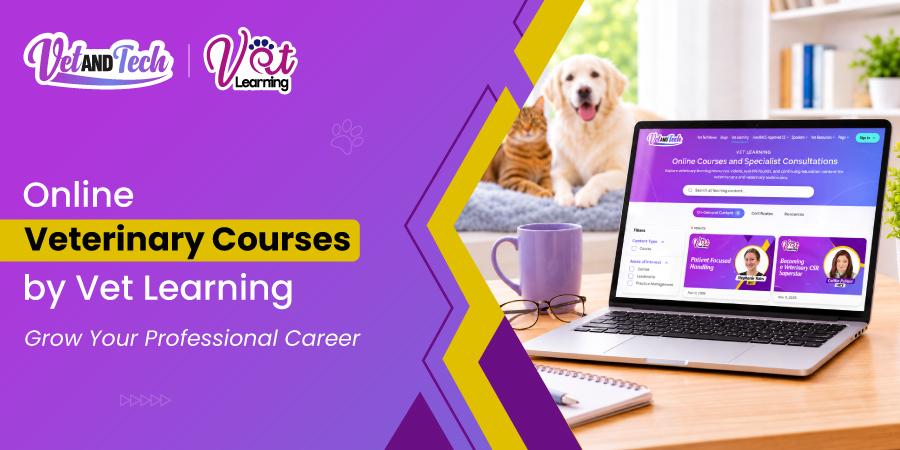
If you're looking for somewhere to start, the Vet Learning section of Vet and Tech brings together a range of learning opportunities across various areas of professional development. This is distinct from the Vet and Tech webinars and focuses on structured learning.
Not sure where to begin? Think about what part of your job you'd like to improve or the skills you want to pick up. Here are a few courses worth exploring:
- Patient-Focused Handling: A good fit for veterinary professionals who work directly with animals and want to build their patient handling skills.
- Becoming a Veterinary CSR Superstar: Covers client service and communication for team members who interact with pet owners every day.
- Emotional Intelligence for Veterinary Teams: Focuses on workplace relationships, understanding others, and working better as a team.
- Practice Managers Foundations: Covers management and leadership topics for those already in a management role or preparing to take one on.
Course formats, pricing, and available credits vary. Take a look at the veterinary courses and find one that matches what you'd like to learn next.
Make Continuous Learning Part of Your Veterinary Career
Professional development in vet medicine extends far beyond clinical knowledge. Communication, leadership, and practical skills are all key to how effective you are in your role and how well your team functions. Online courses make it easier to develop those skills on your schedule.
Explore the range of veterinary learning opportunities available via Vet and Tech and choose the course that suits where you are now and where you want to go.


