




How to Become a Veterinary Radiologist: Career Guide
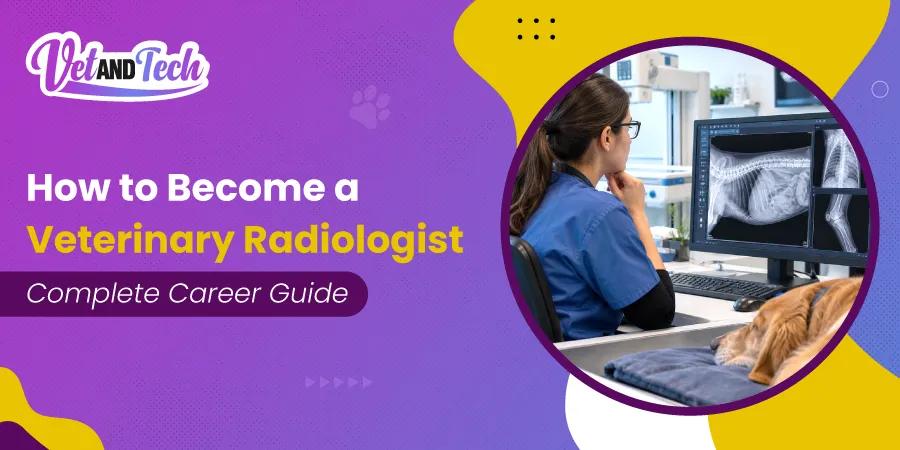
To become a veterinary radiologist, you need a DVM or equivalent veterinary degree, an internship, and a residency in diagnostic imaging, followed by board certification through the ACVR. Once you clear those steps, this can lead to careers in diagnostic imaging, academic medicine, referral practice, or research. It's a long path. But for a veterinarian who genuinely likes puzzling out what an image is telling them, it tends to be worth the years it takes.
This guide walks through what the job actually involves, the full training sequence, how competitive the path really is, what radiologists get paid, and where they end up working. We also get into the AI advancements, since anyone considering imaging as a career right now should be thinking about it. Along the way, we'll flag where the numbers are solid and where the trade-offs are real rather than glossed over.
What Is a Veterinary Radiologist?
A veterinary radiologist, sometimes called a veterinarian radiologist or animal radiologist, is a board-certified specialist who focuses on diagnostic imaging: X-rays, ultrasound, CT, and MRI. Their job is to look at those studies for signs of disease or injury and hand the referring veterinarian a clear diagnostic read they can act on.
The typical route looks like this: DVM, then internship, then a diagnostic imaging residency, then the ACVR certification exam, then Diplomate status. That's the whole ladder in one line, and we'll unpack each stage below.
It's worth separating this role from the veterinary assistant or technician who positions the patient and actually takes the X-ray in a general practice setting. That's essential work, and the imaging process doesn't happen without it, but it's a different job. The radiologist's job starts once the image is developed, interpreting it and turning it into a diagnosis.
What Does a Veterinary Radiologist Actually Do?
Most of the day is reading studies and writing reports, honestly. A radiologist works through radiographs, ultrasound, CT, and MRI, then delivers an interpretation the referring vet can use. A lot of it is consulting too, since the referring veterinarian is often a general practitioner or another specialist trying to figure out what to do next with a case.
Depending on the setting, the job can also include performing image-guided procedures such as biopsies and fine needle aspirates, contributing to research and published case reports, and teaching students, interns, and residents if the role is academic. Radiation oncology is not simply a smaller subset of veterinary radiology. It is a separate specialty with its own training pathway.
Do veterinary radiologists do surgery?
No. They support diagnosis and handle image-guided procedures, but general surgery is its own ACVS specialty with a separate residency and board exam. If what you actually want is to operate, radiology isn't going to give you that.
Veterinary Radiology: Full Education and Certification Path
Here's the sequence.
Undergraduate degree. Most applicants go the biological sciences route, though there's no formal requirement beyond whatever prerequisites your target DVM program lists. Figure on 4 years here.
DVM. A Doctor of Veterinary Medicine from an AVMA-accredited program, another 4 years. Your grades, clinical rotations, and any exposure to imaging research all carry weight when residency applications come around.
Internship. Most programs want at least a year of internship, rotating or specialty track, or an equivalent stretch of clinical work.
Our guide to veterinary internships and residencies covers the mechanics of this stage in more depth, so we'll keep it brief here.
Residency in diagnostic imaging. This is where the real training happens. An ACVR-approved residency generally runs 3 years and mixes hands-on clinical work across modalities with interpretation seminars, rounds, and journal clubs.
Programs are listed on the ACVR residency programs page, and most positions fill through the VIRMP match, though a handful of programs recruit outside it. There are separate small animal and equine or large animal tracks, so it's worth deciding early which direction fits you.
ACVR board exam. After residency, you sit for the ACVR certifying exam, which has both written and practical components, to earn Diplomate status. Finishing an approved residency doesn't guarantee you pass it. Current requirements live at acvr.org.
How Long Does It Take to Become a Veterinary Radiologist?
Becoming a board-certified veterinary radiologist takes at least 8 years after you start veterinary school, and often more depending on how your training path unfolds.
The general US route, per the ACVR, runs like this:
-
DVM or equivalent veterinary degree
-
1 year of internship or equivalent private practice experience
-
3 to 4 years of diagnostic imaging residency
-
ACVR board certification exams
Standard diagnostic imaging residencies run at least 3 years by ACVR rules, though some approved programs stretch to 4. So if you're trying to answer how long it takes to become a veterinary radiologist for yourself, think in terms of a decade or more after high school. This isn't a quick postgraduate add-on, and treating it like one sets people up for a rough surprise partway through.
How Competitive Is This Path?
Veterinary radiology is a specialized and competitive career path, largely because there are relatively few diagnostic imaging residency positions compared with the number of veterinarians interested in pursuing specialty training.
Only around 550 to 600 veterinary radiologists are currently board-certified, making it a relatively small specialty. In a recent cycle, the AVMA reported 94 applicants for 16 available diagnostic imaging residency positions. That means competition for residency training can be significant, even for applicants with strong academic and clinical backgrounds.
Applicants considering other veterinary specialties may also want to compare the training requirements and career paths before choosing a direction. For example, veterinary ophthalmology is another specialty that requires advanced training and board certification. Looking at the education, residency requirements, and day-to-day responsibilities of different specialties can help veterinary students and new graduates decide which path best matches their interests.
The limited number of residency positions means applicants should plan ahead and build relevant experience during veterinary school and their internship. Networking with radiologists, participating in imaging research, attending relevant conferences, and seeking opportunities to work with diagnostic imaging specialists can all help strengthen an application.
The specialty also offers opportunities beyond traditional referral hospitals. Academic institutions, private specialty practices, research organizations, and teleradiology services all employ veterinary radiologists, giving Diplomates several potential career directions after completing their training.
Veterinary Radiologist Salary: Why the Numbers Vary So Much
Search for veterinary radiologist salary, and you'll get numbers that barely look like the same job.
|
Source |
Reported salary |
|
ZipRecruiter |
$201,579 per year |
|
Salary.com |
$144,207 per year |
|
Indeed |
Around $232,753 per year |
Treat all three as estimates. Actual pay depends on location, experience, employer, and practice setting, plus whatever else is on the table.
So why the spread? A few real reasons, not measurement errors.
Practice setting matters most. Academic roles usually pay less than private specialty practice but come with teaching and research built in. Teleradiology can pay competitively while giving you real control over where you live.
Location matters too. Pay differs across US regions and between urban, rural, and international markets, and a bigger number in one city can mean less once you factor in what it costs to live there.
Experience counts for a lot. A newly minted Diplomate and someone fifteen years in are not on the same salary line, and partnership or ownership stakes in a private practice change the total picture further.
And then there's the sample size problem. Veterinary radiology is a small enough field that salary sites are often working from a limited number of self-reported entries, so a few outliers can swing the average more than you'd expect in a larger profession.
How Much Do Veterinary Radiologists Make?
So how much does a veterinary radiologist make? There's no single honest answer. It depends on where you work, how long you've been certified, and what kind of practice you've joined. When you're comparing figures across sources, look at the year the data was collected and the practice setting behind it before you trust any one number. AVMA salary and compensation data is a reasonable cross-check alongside the sites above.
Is radiology the highest-paid vet specialty? Not quite. Surgery and some board-certified internal medicine subspecialties tend to report higher averages, but radiology sits comfortably near the top of the list, and teleradiology in particular has pushed pay upward as demand for remote reads has grown.
Where you get paid the most also tracks location and setting more than modality: private specialty practices in higher cost-of-living regions and busy teleradiology groups tend to report the strongest numbers, while academic roles trade some salary for teaching and research time.
Where Veterinary Radiologists Work
Where a radiologist works shapes both the paycheck and what a normal Tuesday looks like.
Private specialty and referral hospitals. Many specialty hospitals keep a radiologist on staff to read for their own specialists and for referring vets. These roles tend to pay well, especially in larger cities.
Academic institutions. Veterinary schools and teaching hospitals blend clinical reading with teaching and research. Pay usually runs lower than private practice, but the variety of the work is a real draw for some people.
Teleradiology. This is the segment growing fastest right now. Remote groups let radiologists read studies sent in from practices anywhere, and it's also the answer for anyone searching for a veterinary radiologist near me. A clinic without an in-house specialist can send images out rather than go without one. Teleradiology sits alongside the other remote veterinary jobs that have grown across the profession.
Industry and research. Diagnostic imaging companies, pharmaceutical firms, and research organizations also hire radiologists, usually for product development or study work rather than day-to-day clinical cases.
Once you're certified and looking at veterinary radiologist jobs, browse current veterinary jobs to see what's open and which settings are actually hiring.
Is This Career Path Right for You?
Radiology fits people who'd rather solve a diagnostic puzzle than manage a case hands-on day to day. You'll spend long stretches studying images, writing precise reports, and being the person other vets call when they need a real answer. The long training timeline shouldn't be a dealbreaker either, and the idea of remote flexibility down the line should sound appealing rather than beside the point.
It's a worse fit for anyone who thrives on client contact, surgery, or the immediacy of treating a patient directly. Be honest with yourself about how you'd feel at the end of a day spent mostly looking at a screen, because that's most days.
What About AI Advancements in Radiology?
AI tools already help with triage, pre-reads, and flagging abnormalities, and that's only going to expand. What the evidence points to so far is AI augmenting radiologists rather than replacing them: faster throughput, better triage, but final interpretation, image-guided procedures, and talking a case through with the referring clinician all stay human work.
As AI tools become more common, radiologists who understand how to use and critically evaluate them may be better positioned to adapt to changes in diagnostic imaging.
Conclusion
Becoming a veterinary radiologist takes something like a decade of training, a genuinely demanding residency, and a board exam that doesn't let anyone coast through. That's a real ask, and deciding it's not for you is a perfectly reasonable outcome of reading this far.
On the other side of that timeline is a small, in-demand specialty with more than one way to practice and real flexibility once teleradiology enters the picture. If applications and interviews are next on your list, it's worth taking time to prepare for interviews well before you actually need to.
FAQs
What is a veterinary radiologist?
A veterinary radiologist is a board-certified imaging specialist, a DVM who completed a diagnostic imaging residency and passed the ACVR exam to earn Diplomate status. Their job is interpreting studies and guiding the diagnosis, not running the equipment day to day.
What do veterinary radiologists do?
They interpret diagnostic images to help diagnose disease, consult with referring veterinarians and specialists, and perform image-guided procedures like biopsies and fine needle aspirates. They do not perform general surgery. Radiation oncology, which treats cancer with radiation, is a separate specialty with its own training pathway.
How long does it take to become a veterinary radiologist?
At least 8 years after you start veterinary school: 4 years of DVM, about 1 year of internship, and 3 to 4 years of ACVR-approved residency, followed by the board exams. Including a 4-year undergraduate degree, plan on roughly 12 years from the start of college.
Is being a veterinary radiologist worth it?
For veterinarians who prefer diagnostic problem solving over hands-on case management, it offers strong pay, flexibility through teleradiology, and steady demand. The trade-off is the long training timeline and the rigor of residency.
How much do veterinary radiologists make?
Reported salaries vary widely across sources, from roughly $140,000 to $200,000+ annually, with top earners well above that. Pay depends heavily on setting (academic, private specialty, or teleradiology), geography, and experience.
Are veterinary radiologists in demand?
The specialty has a relatively small number of board-certified Diplomates, while demand for diagnostic imaging services continues across referral hospitals, academic institutions, and teleradiology services.
Where can I find veterinary radiologist jobs?
Board-certified radiologists typically find roles at private specialty hospitals, academic institutions, and teleradiology groups. Browse current veterinary jobs on Pago to see what's currently open.


%20VAT%20Blog%20-%20Remote%20Veterinary%20Jobs%20Roles%2C%20Pay%20%26%20How%20to%20Find%20Them-thumbnail-1790256372.webp&w=3840&q=75)
