




Veterinary Acupuncture: What It Is, How It Works, and How to Get Certified
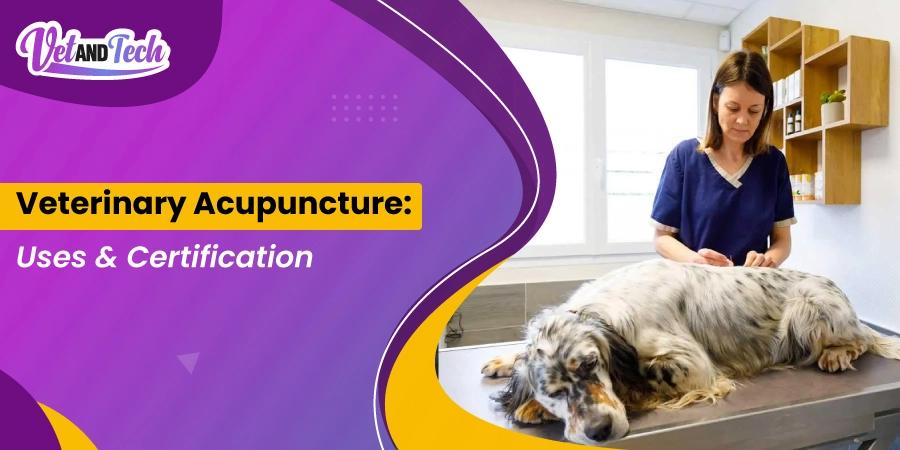
Veterinary acupuncture has moved from the fringe of "alternative" medicine to a standard part of many multimodal pain management protocols. More veterinarians are training in it, more clients are asking for it, and more practices are listing it as a service line — not because it's trendy, but because a growing body of research backs its use alongside conventional treatment.
This guide covers what veterinary acupuncture actually is, what the evidence says, which conditions it's commonly used for, and how to get certified if you're considering adding it to your practice.
What Is Veterinary Acupuncture?
Veterinary acupuncture is the insertion of thin, sterile needles into specific points on an animal's body to stimulate the nervous system, encourage the release of natural pain-relieving compounds, and support the body's own healing response. It draws on principles from Traditional Chinese Veterinary Medicine (TCVM), but most modern certification programs — particularly those with an evidence-based orientation — ground the practice in neuroanatomy and pain physiology rather than energy meridians alone.
In clinical practice, acupuncture in veterinary medicine typically takes one of a few forms:
- Dry needling — traditional needle insertion at specific points
- Electroacupuncture — mild electrical stimulation applied through the needles for a stronger, more sustained effect
- Aquapuncture — injection of a small volume of fluid (often vitamin B12) into an acupuncture point for prolonged stimulation
- Moxibustion — application of heat near acupuncture points, sometimes used alongside needling
Sessions generally run 15–45 minutes, and most patients tolerate treatment well with little to no restraint required.
How Does Acupuncture Work? The Science Behind It
The mechanism of action is usually the first thing skeptical colleagues want explained, and the literature has caught up considerably over the last two decades. Acupuncture points give access to the peripheral nervous system, and stimulation produces effects at three levels — local (at the needle site), segmental (spinal cord), and suprasegmental (brainstem and higher centers) — with all three contributing to analgesia [1].
A 2022 review of evidence-based acupuncture in companion animal pain management reached a similar conclusion: in the hands of a trained practitioner, acupuncture is a safe, effective modality that fits well into a multimodal pain management plan for both acute and chronic pain, rather than working best as a stand-alone treatment [2].
That "trained practitioner" qualifier is doing real work. Needle placement, technique, and case selection are why certification (more on that below) makes a measurable difference in outcomes — and why acupuncture in veterinary medicine is increasingly discussed as a clinical skill rather than a philosophy.
Conditions Treated with Veterinary Acupuncture
Acupuncture is most often reached for as part of a broader pain management or rehabilitation plan rather than a first-line or stand-alone treatment. Common indications include:
- Osteoarthritis and degenerative joint disease
- Intervertebral disc disease (IVDD) and other spinal conditions
- Post-surgical and post-orthopedic recovery
- Hip and elbow dysplasia
- Neurological conditions, including some forms of paresis
- Chronic pain that hasn't fully responded to pharmaceutical management alone
Veterinary Acupuncture for Dogs
Dogs make up the majority of small animal acupuncture caseloads, and canine-specific research reflects that. A study following dogs with neurological and musculoskeletal disease found that acupuncture, used alongside conventional treatment, was associated with measurable improvements in pain scores and quality of life [3]. In practice, the dogs most likely to benefit are older patients with degenerative joint disease, dogs recovering from spinal or orthopedic surgery, and dogs whose owners are looking to reduce reliance on long-term NSAID use.
Cats and horses are also regularly treated, though technique, point selection, and session tolerance differ enough by species that most certification programs teach them as separate tracks.
Integrative Veterinary Acupuncture Therapy: Multimodal Pain Management
Acupuncture rarely works best in isolation, and it's rarely positioned that way in practice. Integrative veterinary acupuncture therapy typically means combining acupuncture with one or more of the following, based on the case:
- Laser therapy (photobiomodulation) — for soft tissue healing and localized inflammation
- Rehabilitation and physical therapy — underwater treadmill, therapeutic exercise, manual therapy
- Chiropractic care — for restricted spinal or joint mobility
- Pharmaceutical pain management — NSAIDs, gabapentin, and other analgesics, sometimes used at lower doses when paired with non-pharmaceutical modalities
- Nutraceuticals and supplements — including omega-3s and, increasingly, CBD, used as daily support between in-clinic sessions
The appeal for practice owners is straightforward: a multimodal pain management program is a durable service line and repeat-appointment driver, not a one-off add-on.
How to Get Certified in Veterinary Acupuncture
Certification requires a DVM or equivalent — most programs also accept third- or fourth-year veterinary students, with the certification itself withheld until licensure is confirmed. Three programs account for most of the certified acupuncturists currently practicing in the US:
IVAS (International Veterinary Acupuncture Society) — the oldest and most widely recognized certifying body, running continuous programs since 1974. The certification course combines online coursework with in-person lecture and hands-on lab sessions (point-location work with live animals), covers small animal, large animal, or dual tracks, and concludes with an exam. Certified members must complete 10 hours of IVAS-approved CE every two years to stay active.
Chi University (Chi Institute) — founded by Dr. Huisheng Xie, offers the Certified Veterinary Acupuncturist (CVA) program, endorsed by Chi University and the World Association of Traditional Chinese Veterinary Medicine. The program runs through a mix of online and on-site sessions plus a hands-on lab component, and certification is only issued once DVM licensure is confirmed.
EBVA (Evidence-Based Veterinary Acupuncture) — a newer program built around neuroanatomically based technique rather than TCVM theory. Certification is split into Level 1 and Level 2 tracks for small animal and/or equine practice, and it's recognized for CE credit by IVAS, AAVA, and IVAPM.
Program length, cost, and format vary meaningfully between these three, so the right fit depends on whether a practitioner wants a TCVM foundation, a neuroanatomy-first approach, or the broadest professional recognition. For vets weighing a move toward integrative or rehab-focused practice, certification is also a legitimate resume differentiator — it shows up often enough in listings on Pago that hiring practices clearly treat it as a valued, in-demand skill rather than a nice-to-have.
CE credit for acupuncture training generally counts toward standard state licensing requirements in addition to society-specific CE — worth confirming with your state board, and a good example of how continuing education pathways for veterinarians keep expanding into specialty skill areas like this one.
Finding a Certified Veterinary Acupuncturist
For pet owners and referring clinics rather than practitioners: the most reliable way to confirm a provider is genuinely certified — not just "offering" acupuncture as a listed service — is to check the credentialing body directly. IVAS, Chi University, and EBVA each maintain directories of certified practitioners, and a legitimate certification will show up on one of them. That's worth checking directly rather than relying on a clinic website alone, since acupuncture is sometimes listed as a service without a named, certified provider behind it.
Is Veterinary Acupuncture Right for Your Practice?
Veterinary acupuncture isn't a replacement for conventional diagnostics or treatment, and none of the major certifying bodies position it that way — it's a tool that fits into a broader pain management and rehabilitation strategy. For practices already leaning into orthopedic, geriatric, or rehab-focused case work, it's one of the more accessible specialty certifications to add, with a training timeline measured in months rather than years and a growing evidence base behind it.
If you're building out a specialty skill set — or looking for practices that already value one — browsing current listings on Pago is a good way to see where integrative and rehab-focused roles, acupuncture included, are actively in demand.
References
- Dewey CW, Xie H. The scientific basis of acupuncture for veterinary pain management: A review based on relevant literature from the last two decades. Open Veterinary Journal. 2021;11(2):203-209. https://pmc.ncbi.nlm.nih.gov/articles/PMC8288732/
- Huntingford JL, Petty MC. Evidence-Based Application of Acupuncture for Pain Management in Companion Animal Medicine. Veterinary Sciences. 2022;9(6):252. https://pmc.ncbi.nlm.nih.gov/articles/PMC9227989/
- Silva NE, Luna SP, Joaquim JG, et al. Effect of acupuncture on pain and quality of life in canine neurological and musculoskeletal diseases. Canadian Veterinary Journal. 2017;58(9):941. https://pmc.ncbi.nlm.nih.gov/articles/PMC5556488/


%20VAT%20Blog%20-%20Remote%20Veterinary%20Jobs%20Roles%2C%20Pay%20%26%20How%20to%20Find%20Them-thumbnail-1790256372.webp&w=3840&q=75)

