

Screw Worm in Animals: Symptoms, Treatment, Prevention, and Veterinary Management
Introduction
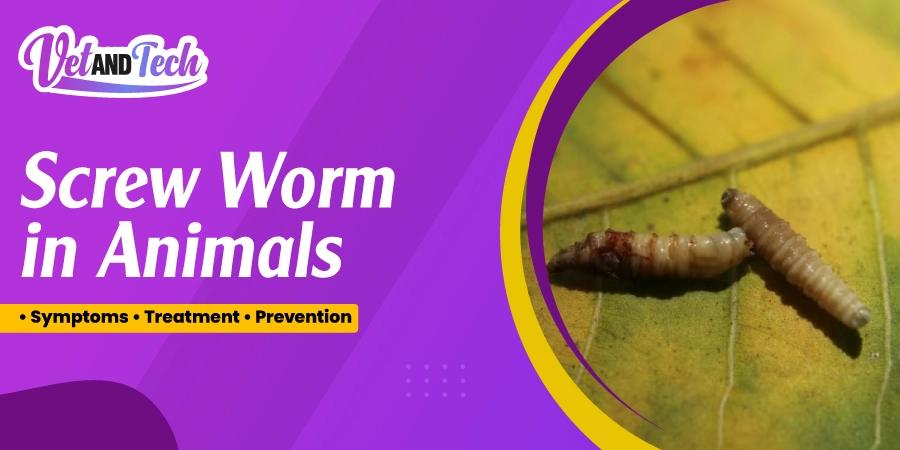
Screw Worm infestation is one of the most serious parasitic emergencies encountered in veterinary medicine. Caused by the larvae of the New World Screwworm Fly (Cochliomyia hominivorax), this condition differs significantly from other forms of myiasis because the larvae actively feed on healthy, living tissue rather than necrotic tissue. As a result, infestations progress rapidly, causing extensive tissue destruction, severe pain, secondary bacterial infections, and, if untreated, systemic illness or death.
Although successful eradication campaigns have eliminated endemic Screw Worm from much of North America, sporadic outbreaks in neighboring regions continue to pose a risk. Veterinarians, veterinary technicians, nurses, and students play a critical role in early detection, diagnosis, treatment, surveillance, and client education. This article provides a clinical overview of Screw Worm infestation, focusing on veterinary management, prevention strategies, and emerging control technologies.
Clinical Signs of Screw Worm Infestation
Clinical presentation depends on the stage of infestation and the extent of tissue involvement.
Early Clinical Signs
Animals in the early stages may exhibit:
- Excessive licking or chewing at a wound
- Restlessness or irritation
- Mild swelling
- Serosanguinous discharge
- Delayed wound healing
- Attraction of additional flies
Early intervention at this stage greatly improves prognosis.
Advanced Clinical Signs
As larvae penetrate deeper into viable tissue, affected animals may develop:
- Deep, enlarging wounds
- Foul-smelling discharge
- Visible larval masses
- Tissue necrosis
- Pain upon palpation
- Fever
- Depression
- Reduced appetite
- Weight loss
- Decreased milk production in dairy animals
- Lameness if limbs are involved
Severe infestations can progress to toxemia, septicemia, shock, and death, particularly in debilitated or neonatal animals.
Veterinary Diagnosis
Prompt diagnosis is essential to limit tissue destruction and initiate appropriate treatment.
A complete diagnostic workup generally includes:
- Comprehensive physical examination
- Careful wound exploration
- Identification of live larvae
- Assessment of lesion severity
- Evaluation for secondary bacterial infection
For surveillance purposes, larvae should be collected for laboratory identification.
Species confirmation may involve:
- Morphological examination of larval spiracles and cephalopharyngeal skeleton
- Molecular diagnostics such as PCR when confirmation is required
Accurate species identification is particularly important in regions where eradication programs are in place.
Differential Diagnosis
Several conditions may resemble Screw worm infestation and should be considered during clinical evaluation.
Common differentials include:
- Facultative myiasis caused by other blowfly species
- Fly strike
- Traumatic wounds with bacterial contamination
- Cutaneous abscesses
- Necrotizing dermatitis
- Bite wounds
- Foreign body granulomas
- Ulcerated neoplasms
- Deep pyoderma
Distinguishing Cochliomyia hominivorax from other myiasis-causing flies is essential because confirmed cases often require regulatory reporting and epidemiological investigation.
Treatment and Veterinary Management:
Successful treatment depends on rapid intervention and a systematic clinical approach.
Immediate Patient Assessment
Evaluate the animal’s overall condition, hydration status, pain level, and extent of tissue damage before initiating treatment.
Mechanical Larval Removal
Complete removal of all larvae is the primary objective. Careful wound exploration is essential because larvae often tunnel beneath surrounding tissue.
Surgical Debridement
Removal of necrotic and damaged tissue promotes wound healing while exposing hidden larvae that might otherwise remain undetected.
Medical Therapy
Veterinarians may prescribe:
- Macrocyclic lactones such as ivermectin or doramectin
- Topical antiseptics
- Systemic antibiotics when secondary bacterial infections are present
- Fluid therapy for severely affected animals when indicated
Treatment protocols should always be based on the individual patient’s clinical condition and current veterinary guidelines.
Pain Management
Appropriate analgesics and anti-inflammatory medications improve patient welfare and facilitate recovery.
Follow-Up Care
Re-examination is essential to confirm complete larval removal, monitor wound healing, and identify any signs of reinfestation. Standardized post-operative monitoring protocols help ensure consistency across follow-up visits.
Prevention and Biosecurity:
Preventing Screw Worm infestation relies on effective wound care, fly control, strong biosecurity, and owner education.
Wound Management
Prompt wound care is the first line of defense. Clean fresh wounds immediately, inspect them regularly, apply appropriate dressings, and protect healing tissue from fly exposure.
Fly Control
Reduce fly populations through good sanitation practices, including proper manure and carcass disposal, elimination of breeding sites, and the strategic use of approved insecticides and repellents.
Livestock Biosecurity
Minimize the risk of disease introduction by inspecting newly acquired animals, quarantining incoming livestock, monitoring animal movement, and promptly reporting suspected infestations.
Client and Producer Education
Educating animal owners is essential for long-term prevention. Encourage routine wound inspection, early recognition of clinical signs, proper postoperative care, and timely veterinary consultation for suspicious wounds.
One Health Implications
Screw Worm is an excellent example of the One Health concept, illustrating the close relationship between animal health, human health, and environmental management.
Although humans are not the preferred host, traumatic myiasis can occur in people with untreated wounds, particularly in endemic or outbreak regions.
Beyond its direct clinical effects, Screw Worm contributes to:
- Reduced livestock productivity
- Animal welfare concerns
- Increased veterinary treatment costs
- Greater antimicrobial use for secondary infections
- Significant economic losses for agricultural industries
Successful control depends on collaboration among veterinarians, livestock producers, entomologists, wildlife specialists, and public health agencies.
Future Control Technologies
Veterinary researchers continue to develop innovative approaches to strengthen Screw Worm surveillance and prevention.
Promising technologies include:
- Enhanced Sterile Insect Technique (SIT) programs
- Genetic population suppression methods
- Artificial intelligence-assisted surveillance
- Smart attract-and-kill trapping systems
- Remote sensing for outbreak prediction
- Geographic Information System (GIS)-based monitoring
- Rapid molecular diagnostic techniques
These advances aim to improve early detection, reduce outbreak risk, and support long-term eradication efforts.
Frequently Asked Questions
What is Screw Worm?
Screw Worm is the larval stage of the New World Screwworm Fly (Cochliomyia hominivorax), an obligate parasite that feeds on healthy living tissue.
Do Screw Worms Infect Humans?
Yes, although humans are not the primary host, Screw Worm can infest open wounds or natural body openings, causing traumatic myiasis. Human cases are uncommon and typically occur in endemic or outbreak regions. Prompt medical attention is essential to remove the larvae, treat the wound, and prevent secondary infections.
What are the first signs of Screw Worm infestation?
Animals often become restless and repeatedly lick or chew at fresh wounds before visible larvae appear. Mild swelling, discharge, and delayed wound healing are also common early signs.
How is Screw Worm diagnosed?
Diagnosis is based on clinical examination, identification of larvae within wounds, and laboratory confirmation through morphological or molecular techniques when necessary.
How is Screw Worm treated?
Treatment includes complete larval removal, surgical debridement, wound care, antiparasitic therapy, pain management, and treatment of secondary bacterial infections when indicated.
How can Screw Worm infestations be prevented?
Routine wound inspection, prompt wound care, effective fly control, livestock biosecurity, and early veterinary intervention remain the most effective preventive strategies.
Conclusion
Screw Worm infestation remains a significant veterinary concern because of its rapid progression, destructive tissue invasion, and potential economic impact. Early recognition, accurate diagnosis, prompt treatment, and comprehensive preventive measures are essential for minimizing animal suffering and reducing the risk of disease spread.
Veterinarians and veterinary professionals play a vital role in educating animal owners, implementing effective wound management protocols, maintaining strong biosecurity practices, and supporting surveillance programs. Continued advances in veterinary medicine, combined with integrated fly control and emerging technologies, will be critical to sustaining the success of historical eradication efforts and preventing future outbreaks.
Inspect animals regularly, treat wounds promptly, educate clients on preventive care, and report suspected Screw Worm infestations immediately. Early action is the key to protecting animal health, safeguarding livestock industries, and preserving decades of successful disease control.
References
- USDA Animal and Plant Health Inspection Service (APHIS). Stop Screwworm. https://www.aphis.usda.gov/animals/animal-health/livestock-and-poultry-disease/stop-screwworm
- World Organisation for Animal Health (WOAH). New World Screwworm (Cochliomyia hominivorax). https://www.woah.org/en/disease/new-world-screwworm-cochliomyia-hominivorax/
- American Veterinary Medical Association (AVMA). New World Screwworm (NWS). https://www.avma.org/resources-tools/one-health/veterinarians-and-public-health/new-world-screwworm
- Centers for Disease Control and Prevention (CDC). About New World Screwworm. https://www.cdc.gov/new-world-screwworm/about/index.html
- Food and Agriculture Organization (FAO). New World Screwworm. https://www.fao.org/animal-health/animal-diseases/new-world-screwworm/en