




- Campylobacteriosis (Campylobacter spp.)
- Cat Tapeworm (Dipylidium caninum)
- Cat Scratch Disease (Bartonella henselae)
- Cryptosporidiosis (Cryptosporidium spp.)
- Giardiasis (Giardia duodenalis)
- Hookworm (Ancylostoma tubaeforme, Ancylostoma braziliense, Uncinaria stenocephala)
- Plague (Yersinia pestis)
- Tick-borne Diseases
- Toxoplasmosis (Toxoplasma gondii)
- Tularemia (Francisella tularensis)
- Temporomandibular Disorder in Cats
- Feline Immunodeficiency Virus (FIV)
- Feline Leukemia (FeLV)
- Feline Infectious Peritonitis (FIP)
- Feline Herpesvirus (FHV-1)
- Feline Calicivirus (FCV)
- Feline Panleukopenia Virus (FPV)
- Chlamydophila felis Infection (Feline Chlamydiosis)
- Feline Enteric Coronavirus (FECV)
Feline Calicivirus (FCV)
Overview
Prevention
Diagnosis and Treatment
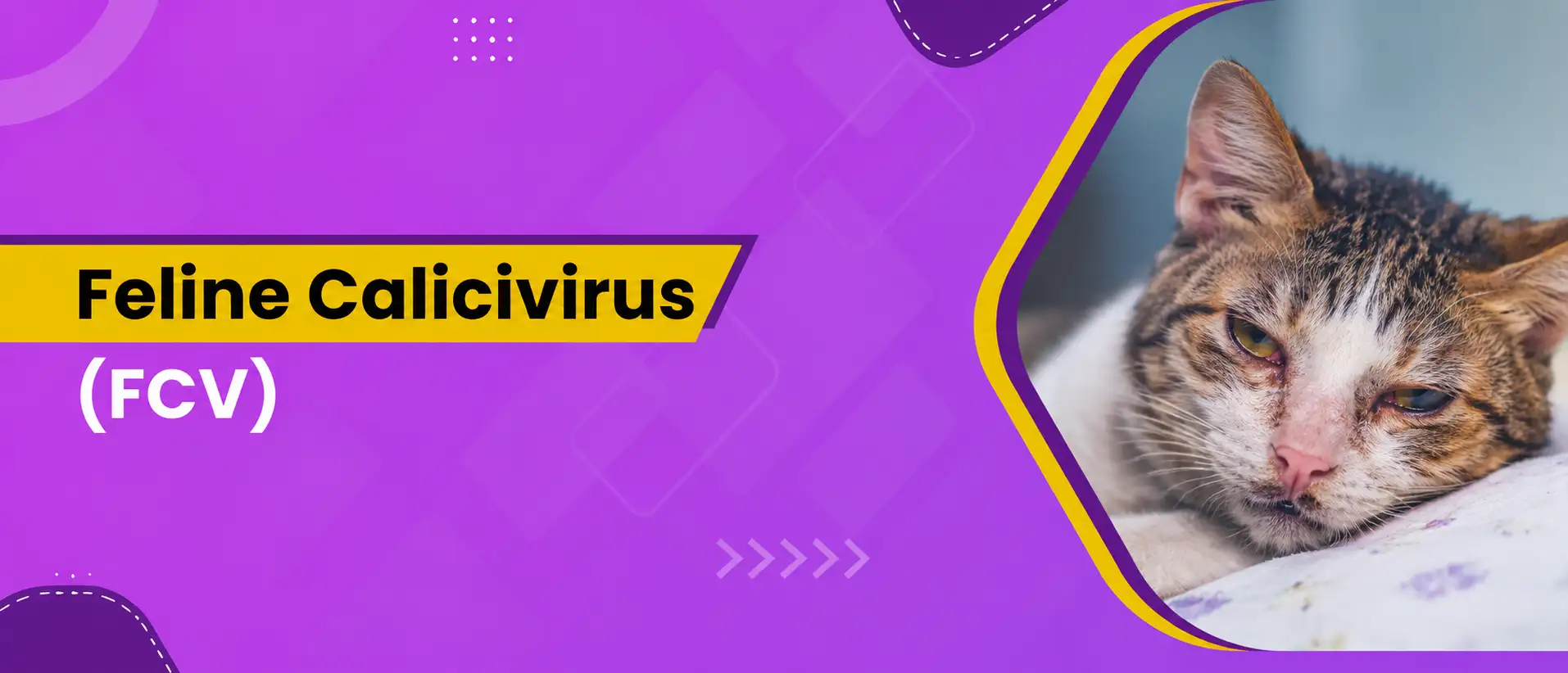
Feline calicivirus (FCV) is a highly contagious virus that affects the lining of the mouth and respiratory tract in cats. It commonly causes upper respiratory disease and oral ulceration, with severity ranging from mild signs to more serious disease.
FCV exists in multiple strains. Some strains cause little to no visible illness, while others lead to oral ulcers or more severe respiratory problems such as pneumonia. Certain strains are also associated with a temporary “limping syndrome,” which occurs without oral ulcers or upper respiratory signs.
How it Spreads:
Feline calicivirus is most commonly seen in shelters and breeding facilities where many cats are housed together.
Who is at higher risk? Cats of all ages are vulnerable to feline calicivirus. However, kittens and young cats are at a higher risk of infection. Unvaccinated cats, immunocompromised cats, and cats living in shelters or multi-cat environments are also more susceptible to FCV transmission and severe illness.
Feline calicivirus spreads through nasal, oral, and ocular secretions. Direct contact with infected cats or indirect contact through contaminated objects can transmit the virus to healthy cats. Contaminated objects may be food and water bowls, carriers, bedding, or environmental surfaces.
After exposure, the virus primarily infects epithelial cells of the oral cavity and upper respiratory tract, including the nasal passages, mouth, throat, and tonsils. In more virulent strains, infection may extend to the lungs and joints. Clinical signs usually appear 2 to 6 days after exposure.
Feline Calicivirus Symptoms
Clinical signs of FCV can range from mild to severe, with complications in severe cases potentially resulting in death.
Common symptoms of FCV in cats include:
- Respiratory and ocular discharge
- Sneezing
- Nasal ulceration
- Conjunctivitis
- Mouth ulceration accompanied by drooling
- Fever
- Lethargy
- Dehydration
- Poor appetite
- Gingivitis or stomatitis
Severe symptoms of FCV in cats include:
- Pneumonia
- Joint inflammation leading to limping
- Skin wounds
- Blood in nasal discharge or stool may occur in rare virulent systemic strains (FCV-VSD).
Symptoms in people: FCV does not infect humans and poses no threat.