




- Campylobacteriosis (Campylobacter spp.)
- Cat Tapeworm (Dipylidium caninum)
- Cat Scratch Disease (Bartonella henselae)
- Cryptosporidiosis (Cryptosporidium spp.)
- Giardiasis (Giardia duodenalis)
- Hookworm (Ancylostoma tubaeforme, Ancylostoma braziliense, Uncinaria stenocephala)
- Plague (Yersinia pestis)
- Tick-borne Diseases
- Toxoplasmosis (Toxoplasma gondii)
- Tularemia (Francisella tularensis)
- Temporomandibular Disorder in Cats
- Feline Immunodeficiency Virus (FIV)
- Feline Leukemia (FeLV)
- Feline Infectious Peritonitis (FIP)
- Feline Herpesvirus (FHV-1)
- Feline Calicivirus (FCV)
- Feline Panleukopenia Virus (FPV)
- Chlamydophila felis Infection (Feline Chlamydiosis)
- Feline Enteric Coronavirus (FECV)
Feline Infectious Peritonitis (FIP)
Overview
Prevention
Diagnosis and Treatment
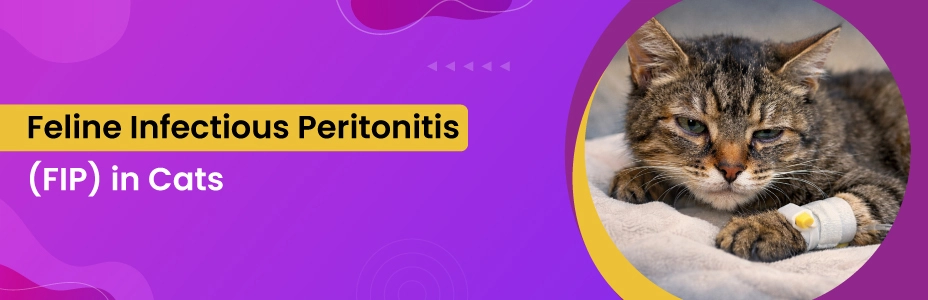
Feline Infectious Peritonitis (FIP) is a fatal, immune-mediated disease caused by a mutation of feline coronavirus (FCoV). FCoV is a common enteric virus, and most infections are subclinical or result in mild gastrointestinal signs. However, in a small subset of infected cats, spontaneous mutations lead to a shift in viral tropism toward monocytes and macrophages. This change enables systemic dissemination and results in pyogranulomatous inflammation affecting multiple organ systems.
The mutated form, referred to as feline infectious peritonitis virus (FIPV), arises within the infected host rather than being transmitted between cats in most cases. Infected monocytes and macrophages disseminate the virus through the bloodstream, invading vessel walls and contributing to vasculitis. Antibody-dependent enhancement may facilitate viral uptake into macrophages, exacerbating the immune-mediated inflammatory response. Both viral factors and host immune competence play a critical role in determining disease progression and clinical outcome.
There are two major forms of FIP, determined by the host immune response. The effusive (wet) form is characterized by the accumulation of protein-rich effusions within body cavities, while the non-effusive (dry) form presents with granulomatous lesions in parenchymal organs. Mixed forms, as well as ocular and neurological variants, may also occur.
How It Spreads
FCoV, the precursor virus, is transmitted primarily via the fecal-oral route. Infected cats shed large amounts of virus in their feces, making shared litter boxes and contaminated environments the main sources of transmission. Salivary transmission may occur but is considered less significant.
FIPV itself is not considered directly contagious. In most cases, FIP develops when FCoV mutates within an individual cat. Vertical (queen-to-kitten) transmission has been reported but is not considered a major route of spread.
Who Is at Risk
FIP is most commonly diagnosed in kittens and young cats under 18 months of age. Cats in high-density environments such as shelters, catteries, and multi-cat households are at increased risk due to higher exposure to FCoV.
Increased susceptibility has been observed in intact males and certain pedigree breeds. Cats co-infected with FIV or FeLV may have a higher risk of disease progression. A secondary peak in incidence is reported in geriatric cats.
Clinical Signs
Common clinical signs of FIP include:
- Persistent, antibiotic-resistant fever
- Weight loss and cachexia
- Anorexia and lethargy
- Abdominal or pleural effusion (effusive form)
- Icterus and hepatosplenomegaly
- Ocular lesions (uveitis, chorioretinitis)
- Neurological signs (ataxia, seizures, nystagmus, behavioral changes)
- Peripheral lymphadenopathy
- Renal enlargement
FIP remains one of the most clinically challenging and diagnostically complex diseases in feline medicine. Veterinary practitioners should maintain a high index of suspicion, particularly in young cats, multi-cat environments, and predisposed breeds.