




- Campylobacteriosis (Campylobacter spp.)
- Cat Tapeworm (Dipylidium caninum)
- Cat Scratch Disease (Bartonella henselae)
- Cryptosporidiosis (Cryptosporidium spp.)
- Giardiasis (Giardia duodenalis)
- Hookworm (Ancylostoma tubaeforme, Ancylostoma braziliense, Uncinaria stenocephala)
- Plague (Yersinia pestis)
- Tick-borne Diseases
- Toxoplasmosis (Toxoplasma gondii)
- Tularemia (Francisella tularensis)
- Temporomandibular Disorder in Cats
- Feline Immunodeficiency Virus (FIV)
- Feline Leukemia (FeLV)
- Feline Infectious Peritonitis (FIP)
- Feline Herpesvirus (FHV-1)
- Feline Calicivirus (FCV)
- Feline Panleukopenia Virus (FPV)
- Chlamydophila felis Infection (Feline Chlamydiosis)
- Feline Enteric Coronavirus (FECV)
Feline Enteric Coronavirus (FECV)
Overview
Prevention
Diagnosis and Treatment
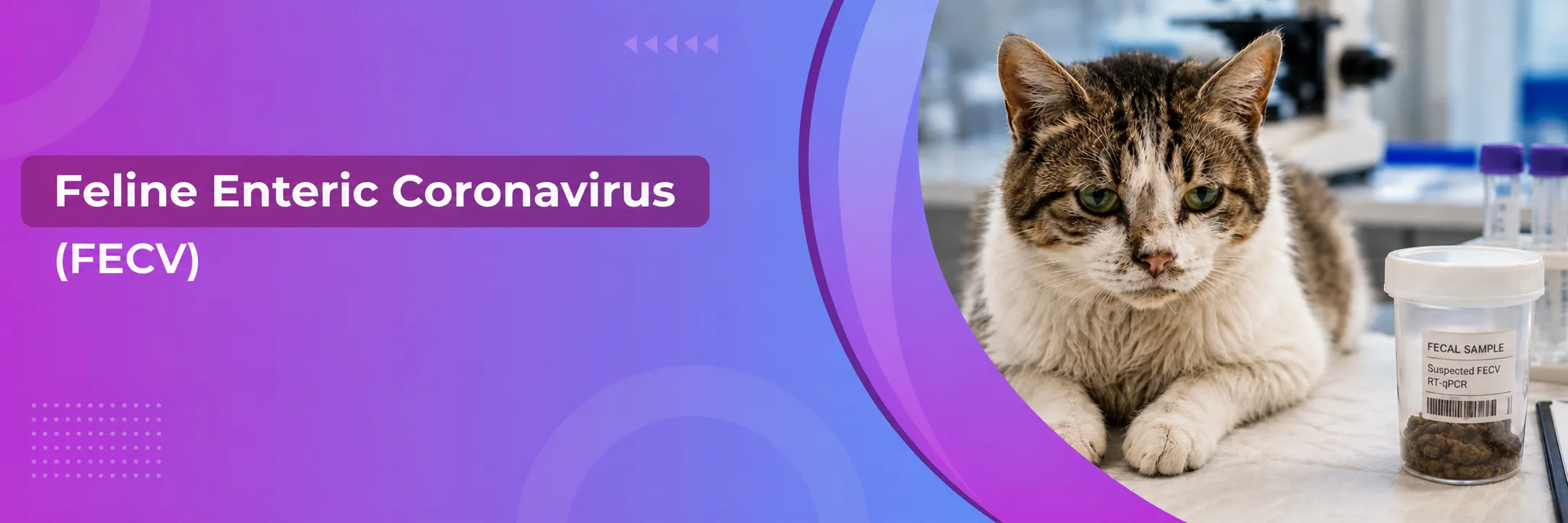
FECV is an enveloped, positive-sense single-stranded RNA virus that replicates mainly in the mature apical columnar epithelial cells of the intestinal villi from the distal duodenum to the cecum.
Feline enteric coronavirus (FECV) is one of two biotypes of feline coronavirus (FCoV); the other type is the feline infectious peritonitis virus (FIPV).
FECV infects primarily the intestinal tract; the other biotype of feline coronavirus, FIPV, can infect and replicate within the macrophages and is associated with feline infectious peritonitis (FIP). Recent evidence suggests that FIP-associated viruses are usually the result of mutations of feline enteric coronaviruses within an individual cat and not circulating independently.
How it spreads:
FECV is transmitted primarily by the fecal-oral route, mainly through contact with infected feces and contaminated fomites. Cats become infected by ingestion or, less commonly, inhalation of particles containing the virus.
Transmission of feline enteric coronavirus is most commonly via sharing of litter boxes. The virus can also be spread by grooming and by contaminated items such as litter scoops, bedding, and food bowls.
Oronasal exposure through saliva is a minor route, and true vertical (transplacental) transmission is considered rare.
Feline enteric coronavirus can survive for several days and, in favorable conditions, for up to several weeks.
It is much more common in catteries, breeding facilities, and animal shelters where many cats live in the same space, because it spreads easily between cats living together. Cats living alone have a much lower chance of being exposed to the virus.
Incubation Period
The incubation period after exposure is typically 2-7 days, but many infected cats do not show obvious signs of disease. The virus replicates in the intestinal mucosa, and fecal shedding generally begins approximately one week after infection.
Cats can shed the virus for some time after the clinical signs have disappeared or even if they never develop any signs.
Clinical signs:
Feline enteric coronavirus causes asymptomatic infections or mild gastroenteritis like diarrhea and vomiting
Feline enteric coronavirus symptoms include the following:
- Mild diarrhea
- Occasional vomiting
- Loss of appetite
- Mild lethargy
- Transient fever
- Dehydration in cats with prolonged vomiting or diarrhea.
- Poor weight gain or weight loss in kittens
Symptoms in people: FECV is non-zoonotic. It does not infect humans or cause disease in people.